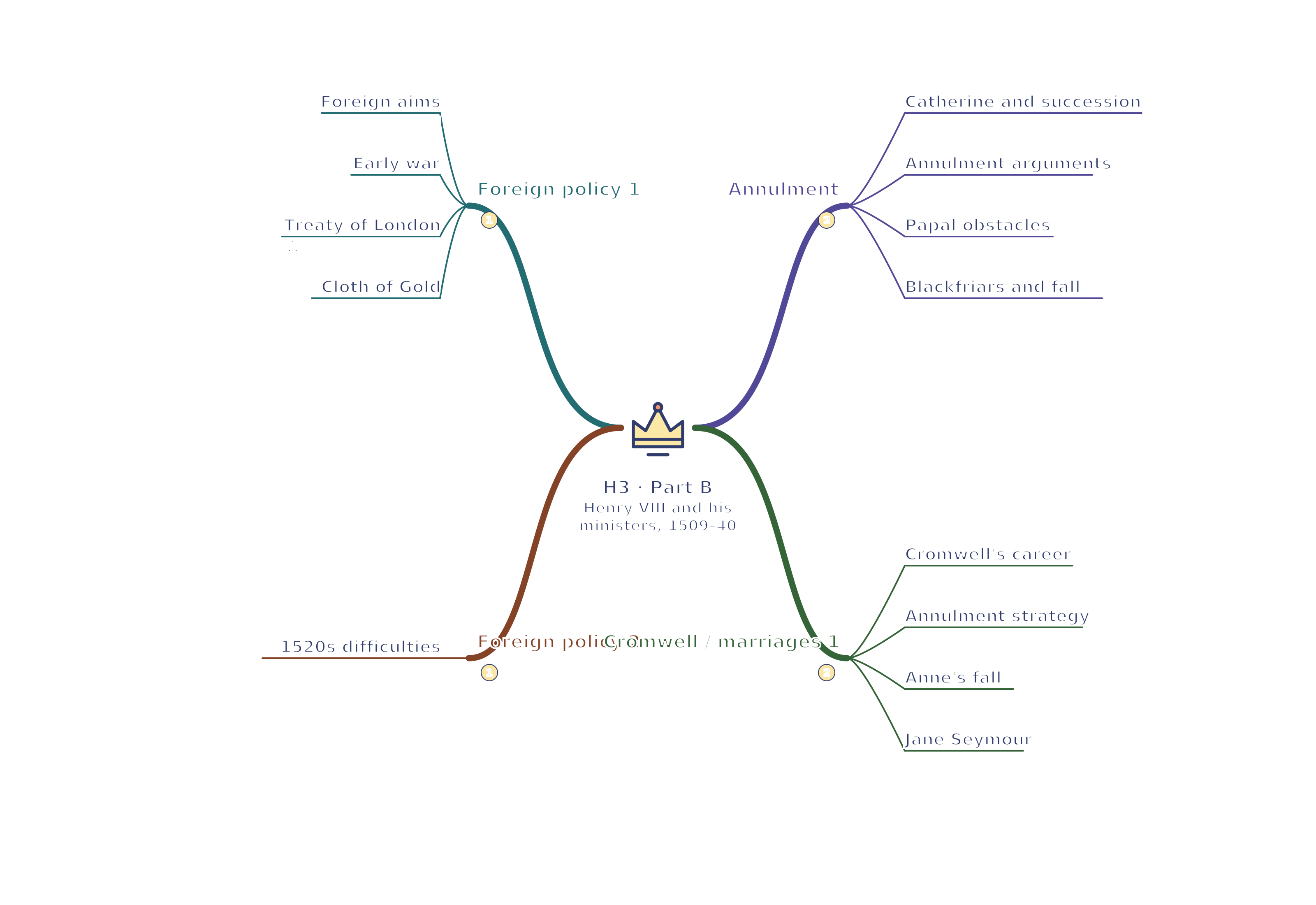
H3 · Foreign policy 1 / Foreign policy 2 / Annulment / Cromwell / marriages 1 Henry VIII and his ministers, 1509–40 mind map
Use your browser’s Print command for A4 landscape, or choose A3 in its paper settings. The SVG remains sharp when enlarged. A text version follows the map.
Read the mind map as text
Foreign policy 1
Foreign aims: Prestige, peace-making and alliances served royal interests
Early war: 1513 victories brought prestige but limited lasting gain
Treaty of London: 1518 collective peace raised Wolsey's diplomatic standing
Cloth of Gold: 1520 display improved contact, not lasting security
Foreign policy 2
1520s difficulties: Habsburg dominance reduced England's bargaining power
Annulment
Catherine and succession: A surviving daughter left Henry seeking a male heir
Annulment arguments: Henry argued his own marriage to Catherine was invalid under biblical law
Papal obstacles: Clement VII faced Charles V and defended papal authority
Blackfriars and fall: 1529 proceedings failed; Henry withdrew royal favour
Cromwell / marriages 1
Cromwell's career: Legal and administrative experience built influence
Annulment strategy: Parliament and royal supremacy bypassed Rome
Anne's fall: Succession, royal preference and political enemies combined
Jane Seymour: 1537 male heir secured a central dynastic aim
Connections
Foreign policy 1 → Foreign policy 2: Diplomatic prestige did not remove costs or Habsburg power.
Annulment → Cromwell / marriages 1: Failure of papal annulment opened a route for Cromwell and Cranmer.