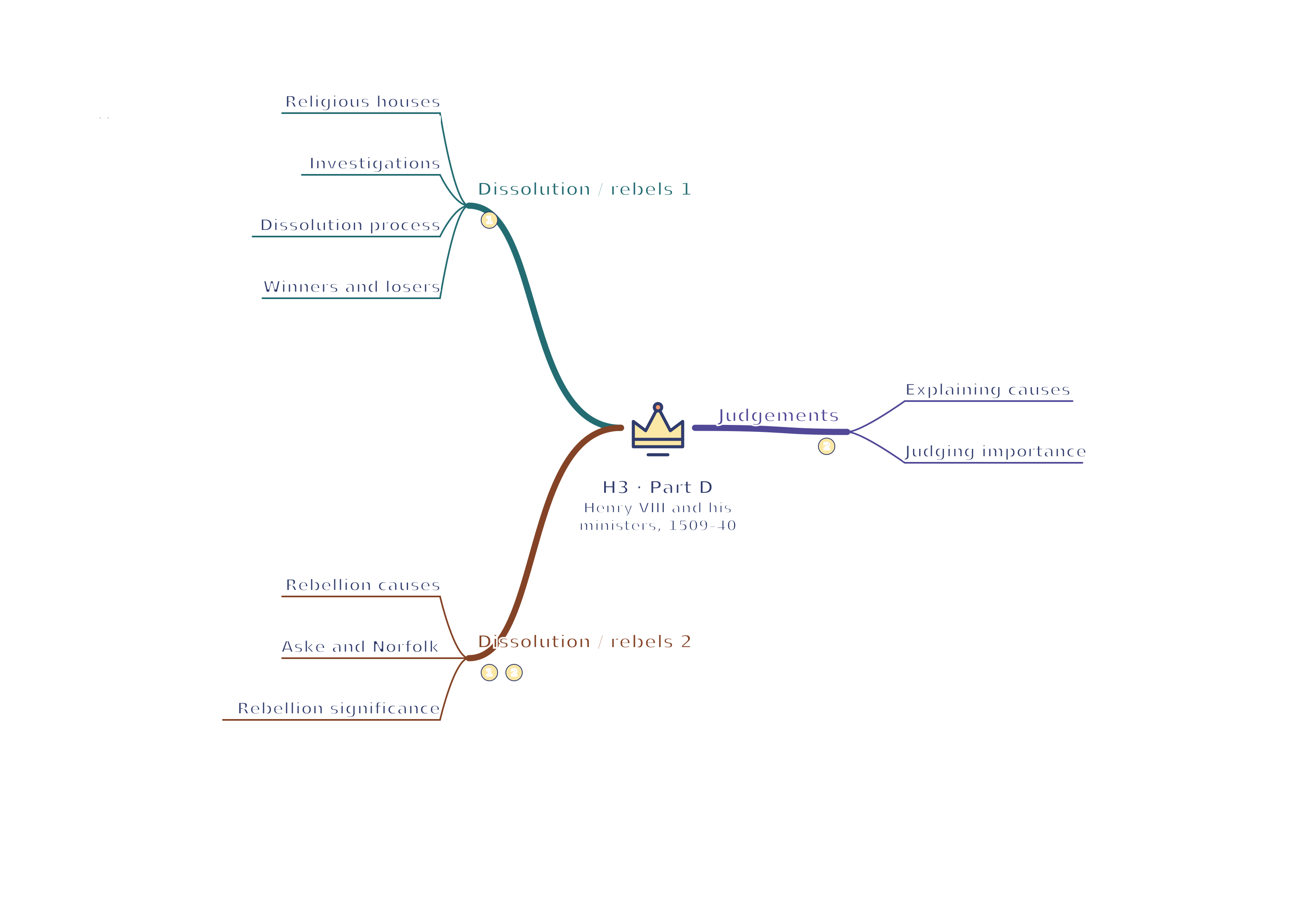
H3 · Dissolution / rebels 1 / Dissolution / rebels 2 / Judgements Henry VIII and his ministers, 1509–40 mind map
Use your browser’s Print command for A4 landscape, or choose A3 in its paper settings. The SVG remains sharp when enlarged. A text version follows the map.
Read the mind map as text
Dissolution / rebels 1
Religious houses: Monasteries provided worship, aid and local employment
Investigations: 1535 surveys and visits supplied financial and moral claims
Dissolution process: Smaller houses closed from 1536; larger ones followed
Winners and losers: Crown and purchasers gained; communities lost services
Dissolution / rebels 2
Rebellion causes: Religion, economic grievances and hostility to ministers overlapped
Aske and Norfolk: Rebel mobilisation met negotiation before repression
Rebellion significance: Large protest failed to reverse the royal programme
Judgements
Explaining causes: Show how a factor changed decisions or created pressure
Judging importance: Compare royal aims, ministerial actions and circumstances
Connections
Dissolution / rebels 1 → Dissolution / rebels 2: Dissolution’s local losses helped cause protest but repression preserved royal policy.
Dissolution / rebels 2 → Judgements: Explaining rebellion requires linked causes and a judgement about outcomes.