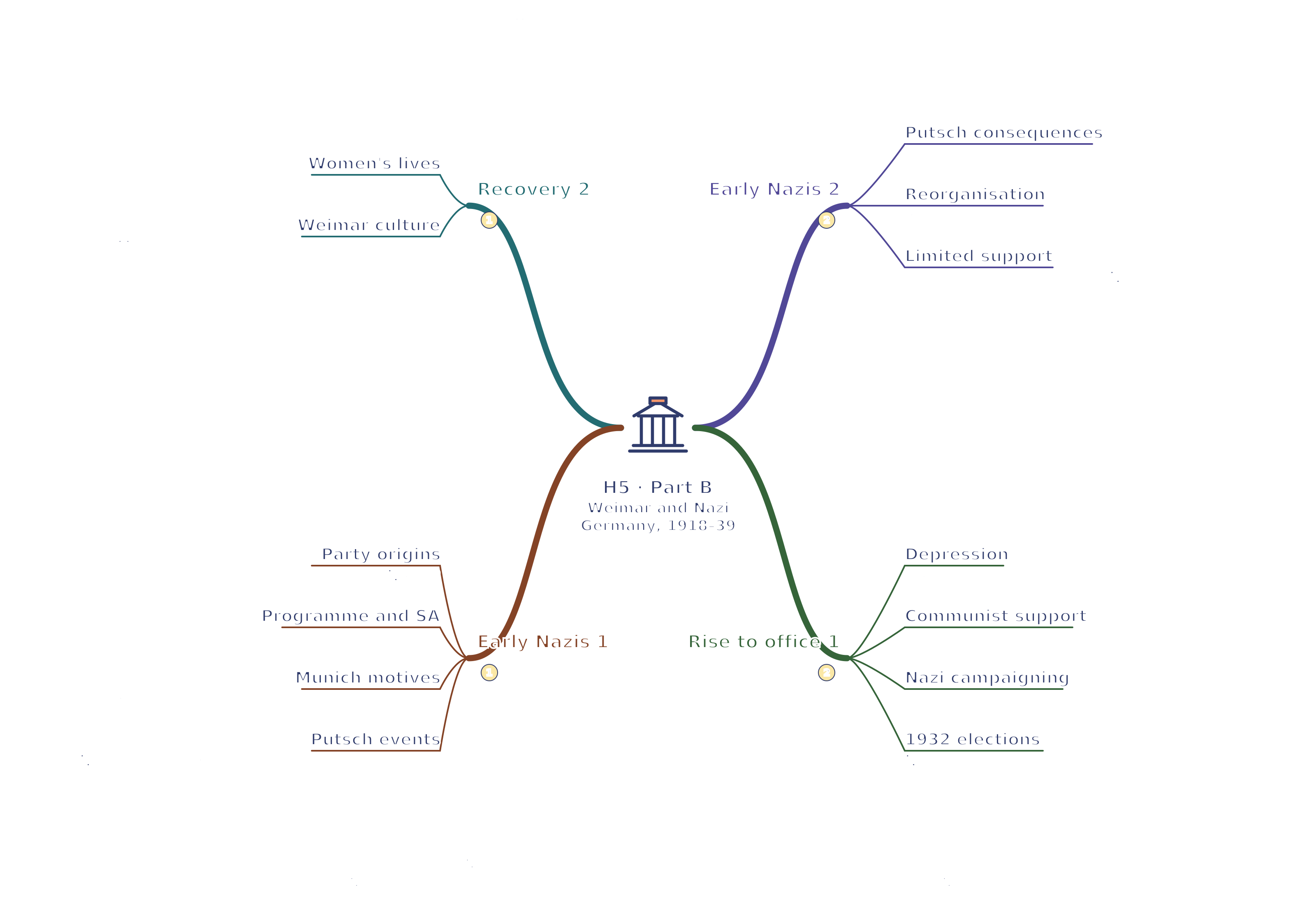
H5 · Recovery 2 / Early Nazis 1 / Early Nazis 2 / Rise to office 1 Weimar and Nazi Germany, 1918–39 mind map
Use your browser’s Print command for A4 landscape, or choose A3 in its paper settings. The SVG remains sharp when enlarged. A text version follows the map.
Read the mind map as text
Recovery 2
Women's lives: Rights and urban freedoms grew; constraints persisted
Weimar culture: Modern art, architecture and cinema met conservative criticism
Early Nazis 1
Party origins: 1919–20: Hitler joined DAP and helped form NSDAP
Programme and SA: Policy promises and paramilitary violence built an identity
Munich motives: 1923 crisis seemed an opportunity for a coup
Putsch events: November 1923 coup failed when officials and police resisted
Early Nazis 2
Putsch consequences: Trial publicity and prison helped reshape Hitler's strategy
Reorganisation: Bamberg and national structures strengthened Hitler's leadership
Limited support: Relative stability reduced Nazi appeal before the Depression
Rise to office 1
Depression: US crisis spread through loans, industry and unemployment
Communist support: Hardship increased KPD appeal and conservative fear
Nazi campaigning: Hitler, propaganda and violence exploited insecurity
1932 elections: Nazis became largest party but lacked a majority
Connections
Recovery 2 → Early Nazis 1: Cultural and social change coexisted with extremist hostility to the republic.
Early Nazis 2 → Rise to office 1: Organisation was more effective when Depression hardship widened Nazi appeal.