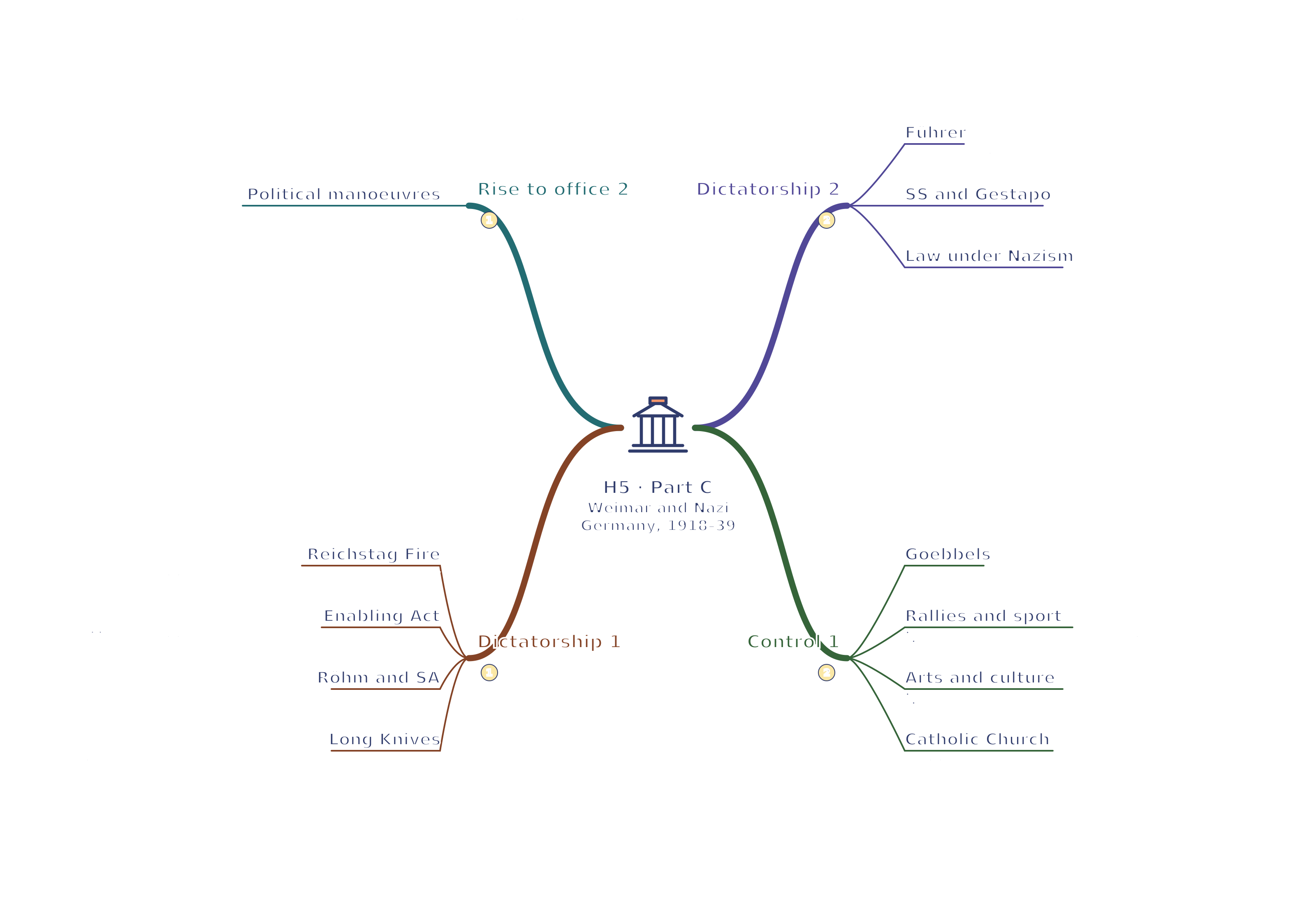
H5 · Rise to office 2 / Dictatorship 1 / Dictatorship 2 / Control 1 Weimar and Nazi Germany, 1918–39 mind map
Use your browser’s Print command for A4 landscape, or choose A3 in its paper settings. The SVG remains sharp when enlarged. A text version follows the map.
Read the mind map as text
Rise to office 2
Political manoeuvres: Papen and elites persuaded Hindenburg to appoint Hitler
Dictatorship 1
Reichstag Fire: February 1933 emergency decree removed key liberties
Enabling Act: March 1933 law let the government legislate without Parliament
Röhm and SA: Army and conservative fears made SA ambitions a liability
Long Knives: June 1934 murders removed rivals and reassured the army
Dictatorship 2
Führer: August 1934 merged leadership and personal army loyalty
SS and Gestapo: Terror depended on policing, detention and denunciations
Law under Nazism: Courts and judges served ideological and political control
Control 1
Goebbels: Censorship and media promoted a controlled public message
Rallies and sport: Nuremberg spectacle and 1936 Olympics projected strength
Arts and culture: Nazis promoted approved styles and suppressed others
Catholic Church: 1933 Concordat promised protection but did not end conflict
Connections
Rise to office 2 → Dictatorship 1: Elite appointment opened a path to repression and legislative dictatorship.
Dictatorship 2 → Control 1: Terror and censorship reinforced control over both conduct and information.