Back to revision notes Open full-size SVG Print mind map Part C · Plant adaptations and hormones Plant structures and their functions mind map Use your browser’s Print command for A4 landscape, or choose A3 in its paper settings. The SVG remains sharp when enlarged. A text version follows the map.
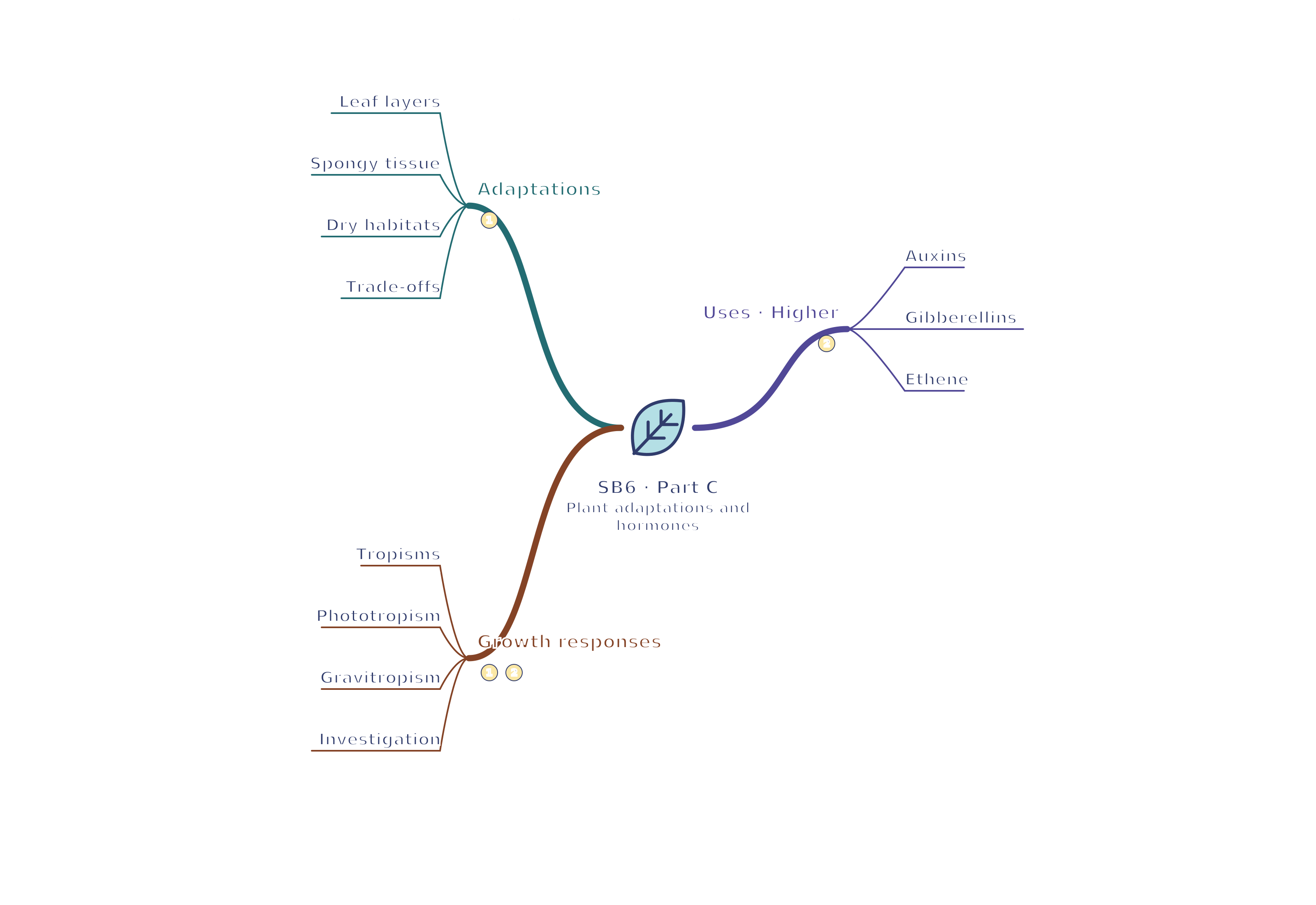
Read the mind map as text Adaptations Leaf layers: Thin / broad; transparent epidermis; chloroplast-rich palisadeSpongy tissue: Air spaces → stomata; xylem brings water; phloem takes productsDry habitats: Rolled / small leaves, thick cuticle, hairs, sunken stomataTrade-offs: Less water loss may limit CO₂; floating leaves: upper stomataGrowth responses Tropisms: Shoot towards light / away from gravity; roots towards gravityPhototropism: Shaded side gets more auxin → more elongation → bend to lightGravitropism: Lower-side auxin: shoot elongates; root growth inhibitedInvestigation: Control age, light, water, temperature; measure growth / bendingUses · Higher Auxins: Rooting powders / selective weedkillers; dose mattersGibberellins: Germination, flowering and fruit development; some seedless fruitEthene: Gaseous hormone; control fruit ripening in storage / transportConnections Adaptations → Growth responses: Structure and growth responses help plants meet environmental demands. Growth responses → Uses · Higher: Commercial treatments apply hormone effects with controlled doses.