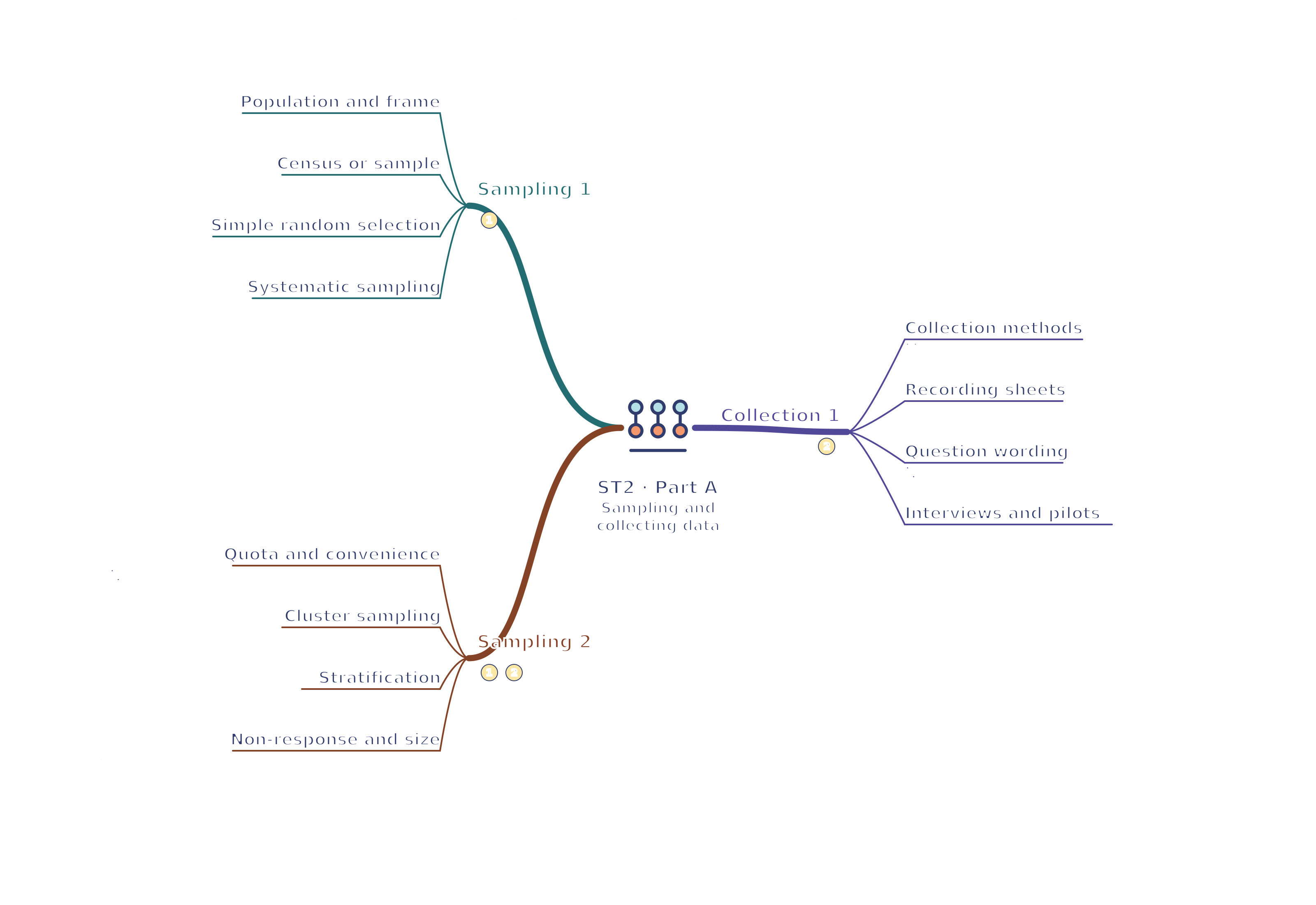
ST2 · Sampling 1 / Sampling 2 / Collection 1 Sampling and collecting data mind map
Use your browser’s Print command for A4 landscape, or choose A3 in its paper settings. The SVG remains sharp when enlarged. A text version follows the map.
Read the mind map as text
Sampling 1
Population and frame: Population target; frame identifies eligible members.
Census or sample: Census attempts all; sample uses a subset.
Simple random selection: Random numbers; reject repeats and invalid IDs.
Systematic sampling: Fixed interval can align with periodicity.
Sampling 2
Quota and convenience: Non-random selection may introduce bias.
Cluster sampling: Convenient groups may be internally similar.
Stratification: Proportional allocation then random within strata.
Non-response and size: Bigger samples do not cure systematic bias.
Collection 1
Collection methods: Match method to purpose and constraints.
Recording sheets: Record IDs, variables, units and missing values.
Question wording: Neutral wording and exhaustive distinct responses.
Interviews and pilots: Pilot collection and revise practical problems.
Connections
Sampling 1 → Sampling 2: The frame and selection methods determine whether strata and other population groups are represented.
Sampling 2 → Collection 1: Selection and non-response risks must inform collection methods, recording and pilots.