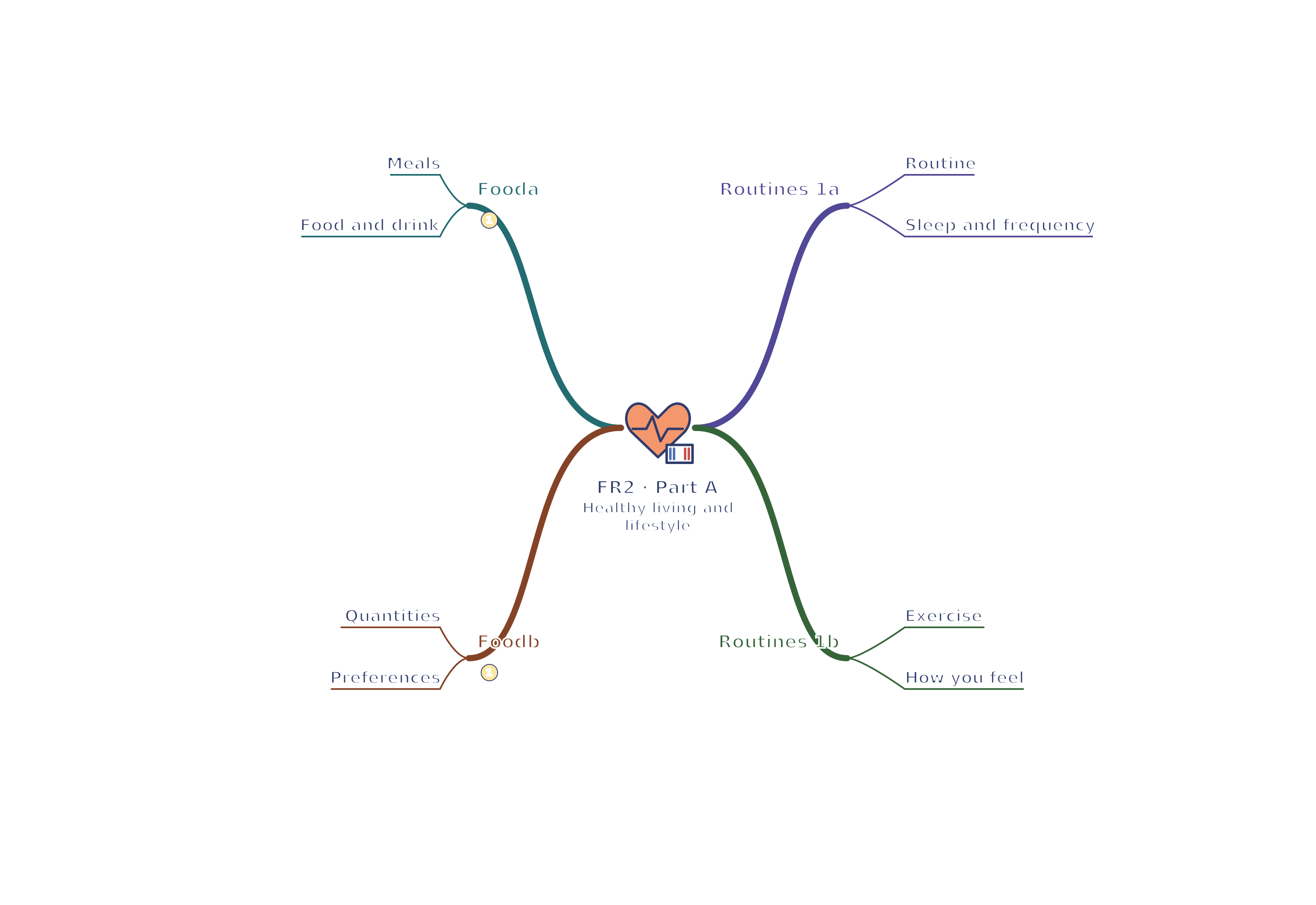
Meals — Le petit déjeuner, le déjeuner and le dîner commonly mean breakfast, lunch and evening meal in France; usage varies between French-speaking regions. Je prends le petit déjeuner à sept heures means I have breakfast at seven. Prendre is useful for meals and drinks; learn je prends, not je prend.
Food and drink — Je mange du pain et je bois de l'eau means I eat bread and drink water. Du, de la, de l' and des express an unspecified amount; j'aime le pain uses the definite article for a general preference. Do not use the same article automatically after manger and aimer.
Quantities — Beaucoup de légumes means a lot of vegetables; un peu de sucre means a little sugar. Quantity expressions normally take de or d': trop de sel, assez d'eau. In je ne mange pas de viande, de replaces the indefinite/partitive after a negative; être is an important exception.
Preferences — Je préfère les fruits parce qu'ils sont bons pour la santé means I prefer fruit because it is good for health. Ils refers to the plural fruits. J'aime manger… needs an infinitive after aimer. State your opinion as an opinion rather than treating every food choice as universal.
Wellbeing and routines
Routine — Je me lève à sept heures, puis je me lave means I get up at seven, then wash. Reflexive pronouns change with the subject: je me, tu te, il/elle se. Je prends une douche means I have a shower. Keep the pronoun before the conjugated verb.
Sleep and frequency — Je dors huit heures par nuit means I sleep eight hours a night. Tous les jours means every day; deux fois par semaine means twice a week; rarement means rarely. Frequency can change the meaning of a habit even when the activity word stays the same.
Exercise — Je fais du sport means I do sport; je joue au tennis means I play tennis. Faire de and jouer à use different prepositions; de le becomes du and à le becomes au. Describe a realistic routine: je marche au collège, I walk to school.
How you feel — J'ai faim, j'ai soif, j'ai froid and j'ai chaud mean I am hungry, thirsty, cold and hot. These use avoir. Je suis fatigué/fatiguée uses être and adjective agreement. In j'ai mal à la tête, the phrase means I have a headache.
Advice — Il faut dormir assez means You must get enough sleep; on doit boire de l'eau means We/one must drink water. Il faut and a conjugated modal take an infinitive. Tu peux marcher davantage offers a possibility rather than a command. Language examples are not personal medical advice.
Risks and balance — Fumer est dangereux means Smoking is dangerous; trop de sucre peut être mauvais pour la santé means too much sugar can be bad for health. The infinitive can act as a noun. Explain the stated risk or moderation using the text; avoid inferring a diagnosis from vocabulary.
Change and application
Past habits — Avant, je mangeais trop de bonbons means Before, I used to eat too many sweets. Hier, j'ai mangé une pomme is one completed event. The imperfect shows the old habit; the perfect marks a particular action. A time phrase helps but the conjugation carries tense.
Plans and wishes — Demain, je vais faire une promenade means Tomorrow I am going to go for a walk. Je voudrais être plus actif/active means I would like to be more active. Avoid je vais fais: aller is conjugated and the next verb remains infinitive.
Reading a contrast — Je mange rarement au restaurant, mais j'y suis allé samedi means I rarely eat in a restaurant, but I went there on Saturday. Rarement describes the general pattern; samedi identifies an exception. Higher y means there. Do not convert one exception into an everyday habit.
Giving reasons — Je me couche tôt parce que je suis fatigué means I go to bed early because I am tired. Donc introduces a result: je suis fatigué, donc je me couche tôt. Parce que explains why; donc shows what follows. Keep the causal direction clear.
Practical task — Keep a fictional three-day routine in French, with meals, sleep and movement, then suggest one change with a reason. Read it aloud to a listener and answer follow-up questions. Accurate vocabulary alone does not establish the quality of an extended answer or pronunciation.
Building a varied meal — Une pomme, une banane, du riz, des pâtes, du poisson and du poulet name an apple, a banana, rice, pasta, fish and chicken. Compare je mange une pomme, one whole apple, with je mange du poulet, an amount of chicken. Je bois du lait mais je préfère l'eau means I drink milk but prefer water: preference and eating/drinking use different article choices.
Ordering a meal — Je voudrais une salade et une bouteille d'eau, s'il vous plaît means I would like a salad and a bottle of water, please. L'addition, s'il vous plaît asks for the bill; it does not order another dish. Sans lait means without milk; avec du fromage means with cheese. Repeat the requested item and quantity when clarifying an order rather than relying on a single food word.
Describing a health problem — J'ai mal au dos means My back hurts; j'ai mal aux dents means I have toothache. À contracts with le/les: au dos, aux dents, but à la jambe. Je suis malade means I am ill; un médecin is a doctor and une pharmacie a pharmacy. Describe the supplied symptoms and ask for help: do not infer a diagnosis from the vocabulary alone.
Wellbeing and change — Je me repose quand je suis stressé means I rest when I am stressed. Trop de travail can explain a problem; assez de sommeil means enough sleep. Avant, je dormais mal, mais maintenant je dors mieux contrasts an earlier habit with improvement now. Mieux describes sleeping better; meilleur is an adjective. State what changed rather than treating a future intention as an achieved improvement.
Test yourself
30 questions · Random sets of 10. These quick checks support revision; practise longer explanations and justified judgements too.
Mind map
Use the branches to recall the ideas and explain their connections. Check the revision notes for the full detail.
FR2 · 1
View FR2 · 1 mind mapOpen the full-size map to zoom. Use the printable view for A4 landscape or enlarge to A3.
 Mr Kidman's Classroom