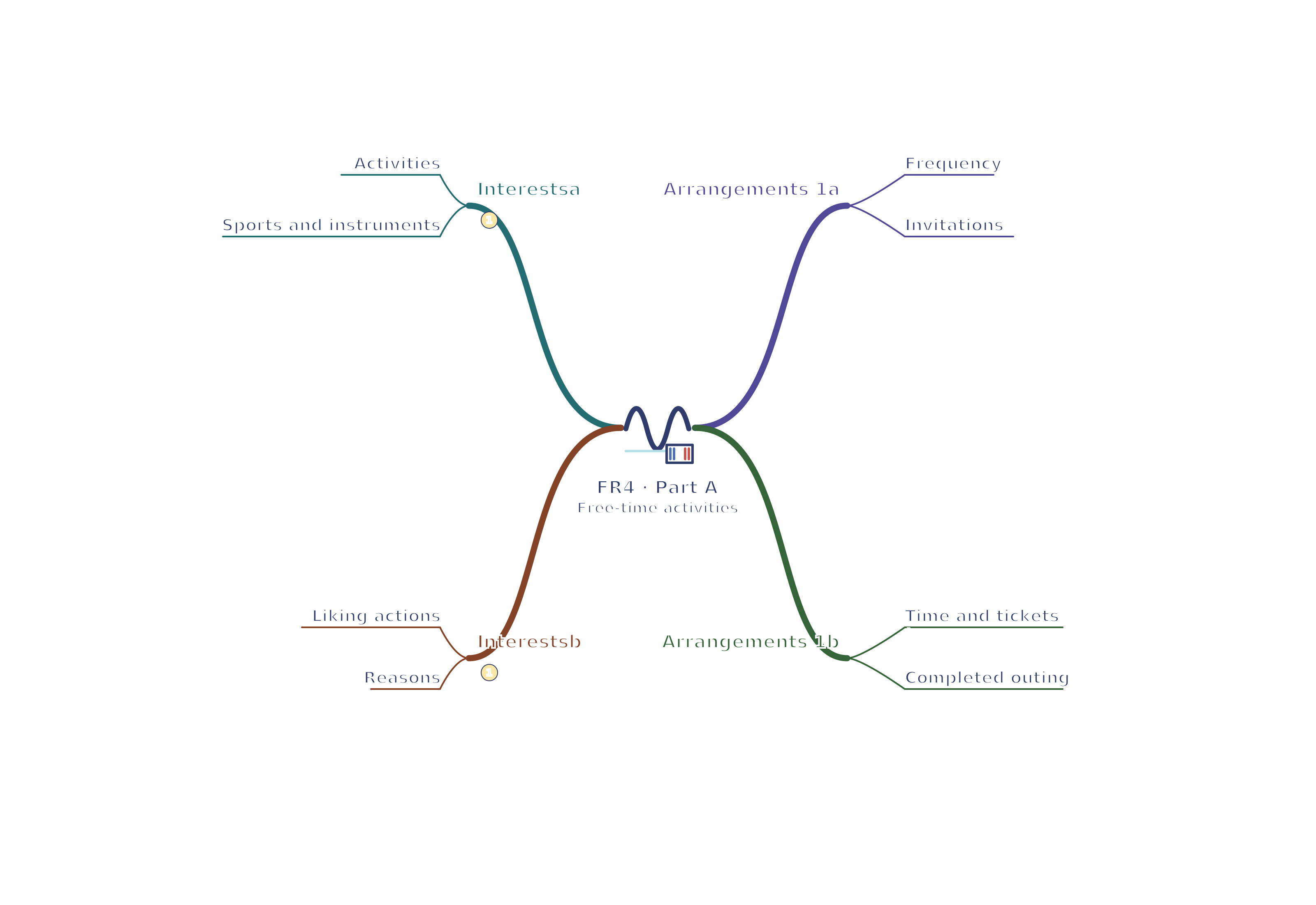
Activities — Je lis, je regarde un film and j'écoute de la musique mean I read, watch a film and listen to music. Écouter directly takes its object: j'écoute la radio, without à. Regarder is to watch/look at; voir is to see. Choose the verb that expresses your action.
Sports and instruments — Je joue au foot means I play football; je joue du piano means I play the piano. Jouer à is used for games/sports; jouer de for instruments. À le becomes au, à les aux, de le du and de les des.
Liking actions — J'aime nager means I like swimming; je déteste courir means I hate running. The second verb stays infinitive. Je préfère lire à la maison means I prefer reading at home. Translate the English -ing according to its function, not with a French present participle automatically.
Reasons — C'est amusant, passionnant, ennuyeux or relaxant means It is fun, exciting, boring or relaxing. La lecture est relaxante agrees the adjective with lecture. Parce que ça me détend means because it relaxes me. Vary reasons and support them with relevant detail.
Arrangements and experiences
Frequency — Je nage une fois par semaine means I swim once a week. Souvent, quelquefois and jamais mean often, sometimes and never; jamais normally needs ne before the verb in formal writing. Le samedi indicates a regular Saturday habit, unlike a single completed samedi event.
Invitations — Tu veux aller au cinéma ? means Do you want to go to the cinema? Volontiers means gladly; désolé, je ne peux pas means sorry, I cannot. Answer the invitation, then agree a place and time. Vouloir and pouvoir take infinitives.
Time and tickets — Le film commence à huit heures means The film starts at eight. Un billet is a ticket, which can give entry to an event or cover a journey; une place can mean a seat. À quelle heure ? asks at what time; combien ? asks how much/how many. Read dates as well as clock times.
Completed outing — Hier, j'ai vu un film avec mes amis means Yesterday I saw a film with my friends. Voir has past participle vu. Nous avons mangé après le film means We ate after the film. Use the auxiliary and participle together, not a bare participle.
Background and reaction — Il faisait froid, mais le match était passionnant means It was cold, but the match was exciting. The imperfect supplies weather and description; j'ai marqué un but gives a completed event. C'était mieux que prévu means It was better than expected.
Developing responses
Future arrangements — Samedi prochain, je vais jouer au tennis means Next Saturday I am going to play tennis. Je voudrais essayer un nouveau sport expresses a wish. If a present form refers to a scheduled future event, the context must establish it: le concert commence demain.
Comparisons — Ce livre est plus intéressant que le film means This book is more interesting than the film. Je chante mieux que mon frère means I sing better than my brother. Meilleur modifies a noun or subject as an adjective; mieux modifies performance as an adverb.
Reading preferences — Je n'aime plus ce jeu means I no longer like this game: plus is part of a negative, not more. Higher grammar includes ne…plus. Je préfère jouer dehors gives a present preference, even if a previous sentence praises a video game in the past.
Culture without stereotypes — French-speaking communities have varied music, sports, books and films. Describe the actual person or source in the task rather than claiming all French speakers share one hobby. A short review needs the title/type, a supported reaction and a recommendation.
Application — Arrange a fictional outing by exchanging questions, then recount what happened and explain a future preference. Check time expressions, the auxiliary in past verbs and the preposition after jouer. Actual oral interaction needs a listener and follow-up questions.
Books and screen stories — Un roman is a novel; une bande dessinée a comic book; un personnage a character in a story. Ce film raconte l'histoire d'une famille means This film tells the story of a family. L'histoire est drôle mais la fin est triste evaluates story and ending separately. Do not confuse un acteur, the performer, with un personnage, the fictional role.
Sporting participation — Je m'entraîne au stade means I train at the stadium; notre équipe a gagné le match means Our team won the match. Gagner is win/earn, perdre is lose, and un but is a goal. Elle a gagné deux matchs distinguishes results from elle s'entraîne deux fois par semaine, a training habit. Use the actual result rather than assuming the better-known team won.
Cost and access — L'entrée est gratuite pour les enfants means Entry is free for children; il faut réserver means You must book. Fermé le lundi means closed on Mondays; ouvert jusqu'à dix-huit heures means open until 18:00. A cheap ticket may still require advance booking. Use price, opening times and stated access conditions together when selecting an outing.
Changing an arrangement — Le concert est complet means The concert is fully booked; il reste deux places means Two seats remain. On peut aller au cinéma à la place means We can go to the cinema instead. À la place signals substitution, not an extra activity. In a message exchange, identify the final agreed activity and time after an apology or alternative proposal.
Test yourself
30 questions · Random sets of 10. These quick checks support revision; practise longer explanations and justified judgements too.
Mind map
Use the branches to recall the ideas and explain their connections. Check the revision notes for the full detail.
FR4 · 1
View FR4 · 1 mind mapOpen the full-size map to zoom. Use the printable view for A4 landscape or enlarge to A3.
 Mr Kidman's Classroom