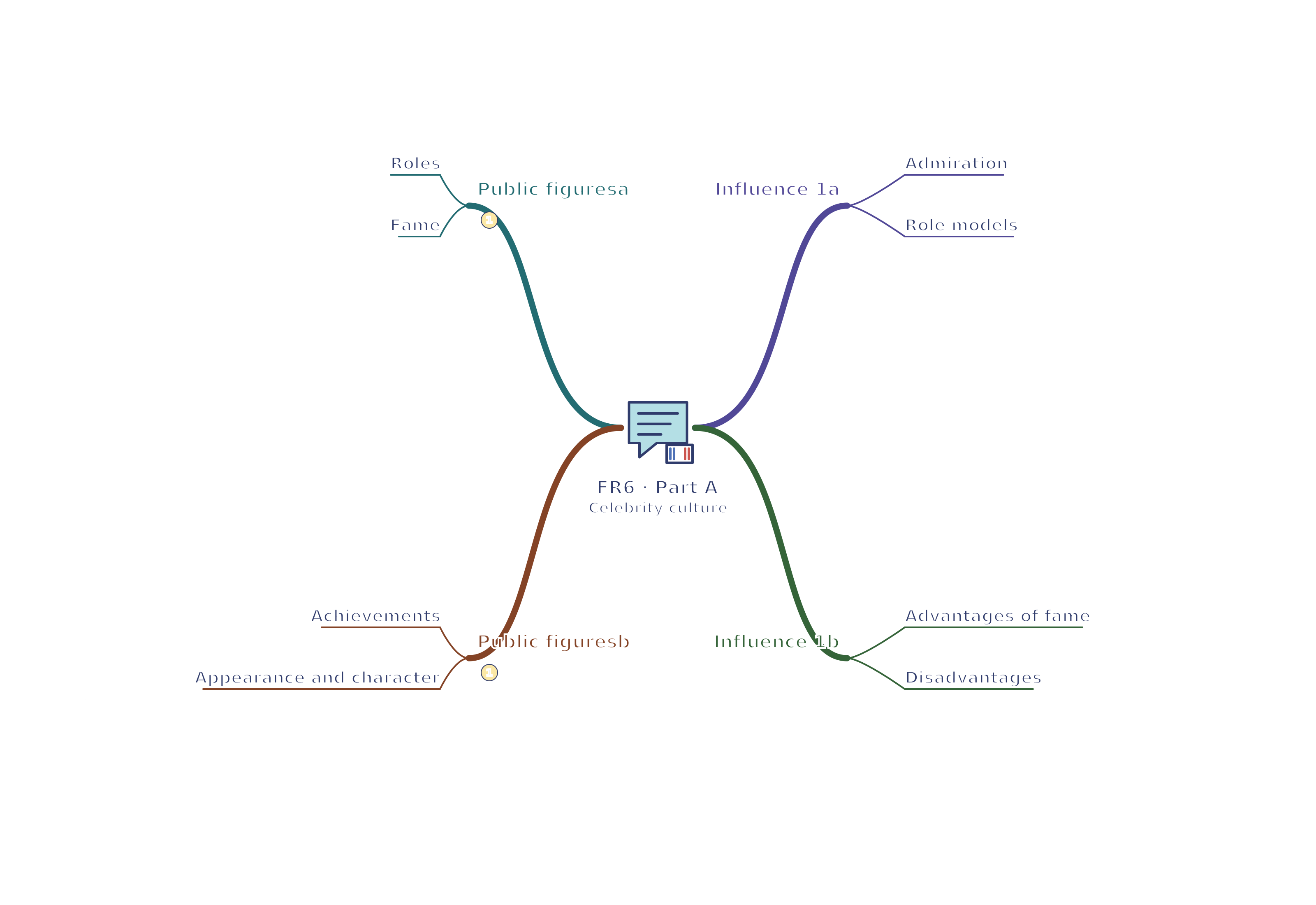
Roles — Un acteur/une actrice, un chanteur/une chanteuse and un sportif/une sportive mean actor, singer and sportsperson. Describe a person with the correct gender agreement. Il est acteur normally has no article; c'est un acteur célèbre includes one.
Fame — Célèbre and connu/connue mean famous and known/well-known. Elle est connue pour sa musique means She is known for her music. Fame is a description of public recognition, not proof of talent, honesty or suitability as a role model.
Achievements — Elle a gagné un prix means She won an award; il a commencé sa carrière très jeune means He began his career very young. The perfect places completed achievements in time. Use a supplied biography or clearly fictional example rather than inventing facts about a real celebrity.
Appearance and character — Il a les cheveux courts et il semble généreux means He has short hair and seems generous. Semble signals an impression. Appearance does not establish personality. If a text gives evidence of generosity, cite the action rather than treating the adjective as certain.
Opinions and influence
Admiration — Je l'admire parce qu'elle travaille dur means I admire her because she works hard. L' is a direct object pronoun before admire; it can replace le or la before a vowel. Dur functions adverbially here. Explain the reason instead of only saying c'est mon idole.
Role models — Un modèle can mean a role model; un exemple can mean an example. Elle encourage les jeunes à faire du sport means She encourages young people to do sport. Consider the action and its effect; a large audience alone does not establish a positive influence.
Advantages of fame — Une personne célèbre peut gagner beaucoup d'argent means A famous person can earn a lot of money. Peut expresses possibility, not a guarantee. Elle peut soutenir une association means She can support an organisation. Develop a relevant example of the claimed advantage.
Disadvantages — Il a peu de temps libre et moins de vie privée means He has little free time and less privacy. Peu de is little/few; un peu de is a little/some. Trop de pression can describe too much pressure. Compare benefits and costs without assuming all experiences are identical.
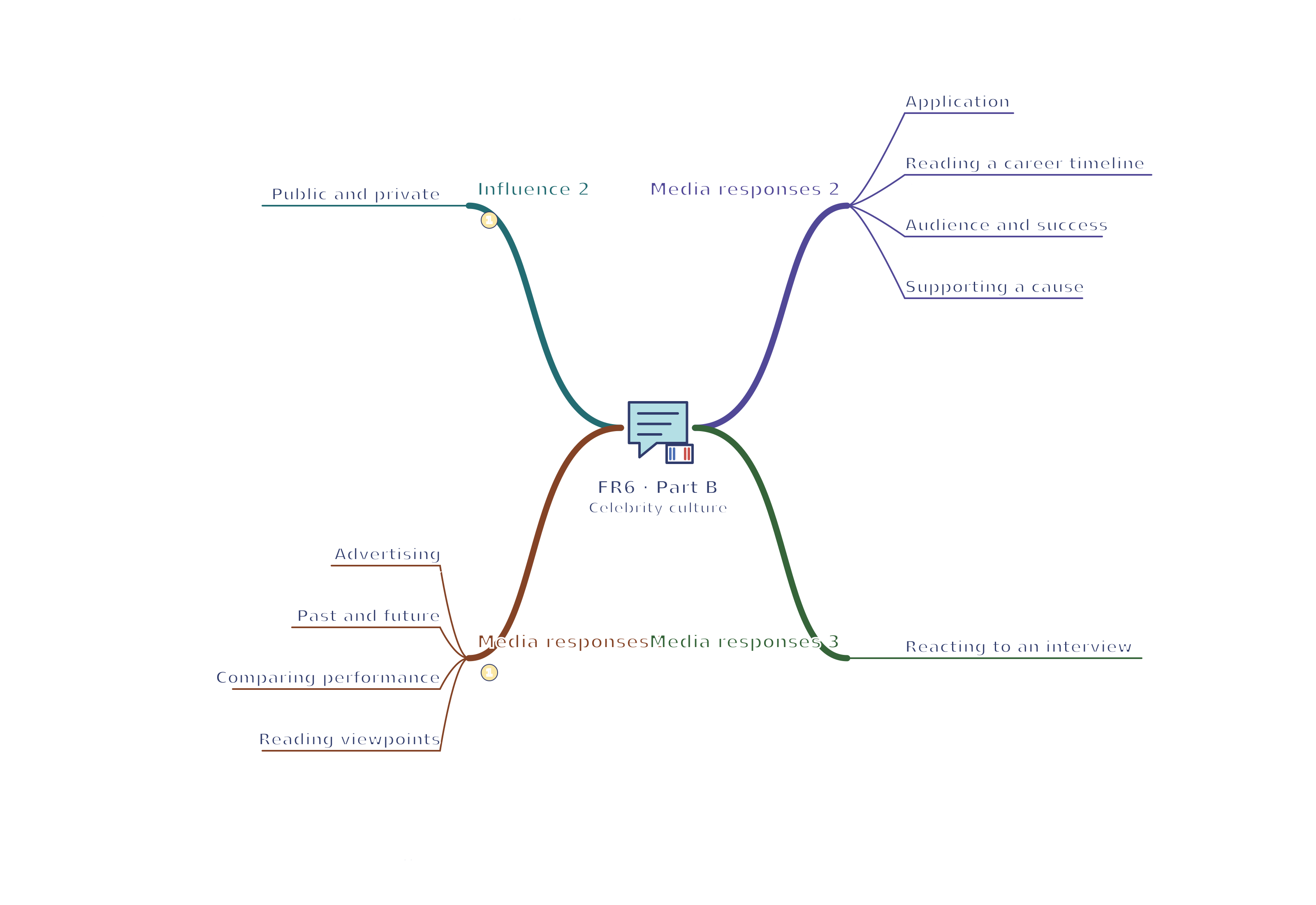
Public and private — Les médias parlent de sa vie privée means The media talk about his/her private life. Son/sa agrees with the noun it comes before, so sa does not prove a female owner. A source might distinguish professional achievements from private rumours; do not merge the two as established fact.
Media and response
Advertising — Cette célébrité fait de la publicité means This celebrity advertises. Une publicité is an advertisement. A paid recommendation can aim to persuade: look for an explicit sponsorship statement and identify the product rather than assuming a personal opinion is independent evidence.
Past and future — Avant, je suivais ce chanteur; maintenant, je préfère une autre artiste means I used to follow this singer; now I prefer another artist. Je vais regarder son prochain film is a future plan. Time shifts can reverse an earlier favourable opinion.
Comparing performance — Elle chante mieux que lui means She sings better than him; son dernier film est meilleur means his/her latest film is better. Mieux modifies singing; meilleur agrees as an adjective. Dernier can mean last/latest depending on context.
Reading viewpoints — Même si le concert était cher, j'ai adoré la musique means Although the concert was expensive, I loved the music. This is an extension conjunction example. An objection about price does not necessarily mean a negative overall judgement; identify both clauses and their relationship.
Application — Using an invented biography, describe achievements and explain whether the person is a useful role model. Separate supplied facts, impressions and your judgement. Include a justified comparison and answer follow-up questions about benefits and drawbacks of fame.
Reading a career timeline — Elle est née en 2005; elle a sorti son premier album en 2023 means She was born in 2005; she released her first album in 2023. This is a fictional example. Être née agrees with a female subject; a sorti has avoir when sortir takes an object. A debut, an award and a later performance are different events: match each date to its verb.
Audience and success — Un spectateur watches an event; un lecteur reads; un abonné subscribes. Elle a beaucoup d'abonnés mais peu de spectateurs au concert means She has many subscribers but few spectators at the concert. Peu de means few/little, not a few. Keep the actual audience measure when reporting success rather than replacing every figure with fans.
Supporting a cause — Il donne de l'argent à une association et participe à un projet means He gives money to an organisation and takes part in a project. Donner à identifies the recipient; participer à introduces the activity. A donation, a promise and a completed result are different evidence. Explain the action supplied by the profile before giving your judgement about its influence.
Reacting to an interview — Dans l'entretien, elle explique son choix, mais le journaliste n'est pas d'accord means In the interview, she explains her choice, but the journalist disagrees. Son choix means his or her choice; the noun does not identify the owner. Track who says each view. Une critique may be a review or criticism, so its presence alone does not prove the interview was hostile.
Test yourself
30 questions · Random sets of 10. These quick checks support revision; practise longer explanations and justified judgements too.
Mind map
Use the branches to recall the ideas and explain their connections. Check the revision notes for the full detail.
FR6 · 1
View FR6 · 1 mind mapOpen the full-size map to zoom. Use the printable view for A4 landscape or enlarge to A3.
 Mr Kidman's Classroom