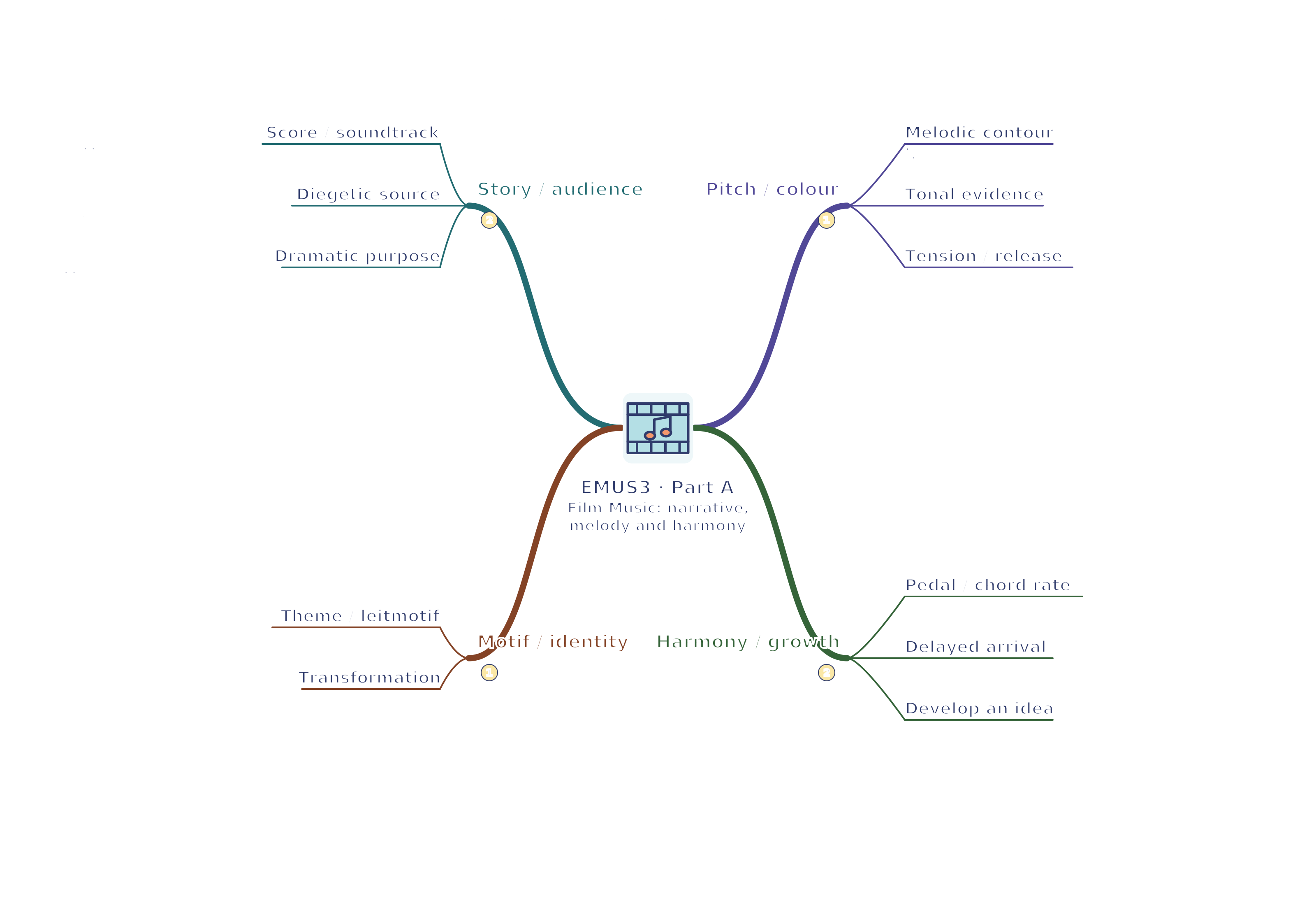
Part A · Film Music: narrative, melody and harmony Film Music mind map
Use your browser’s Print command for A4 landscape, or choose A3 in its paper settings. The SVG remains sharp when enlarged. A text version follows the map.
Read the mind map as text
Story / audience
Score / soundtrack: Music is one part of a soundtrack; underscore leaves dialogue clear
Diegetic source: Story-world source differs from music supplied only for the audience
Dramatic purpose: Musical context shapes associations; effects are not fixed
Motif / identity
Theme / leitmotif: A dramatic association makes a recurring idea a leitmotif
Transformation: Keep identity while changing rhythm, register, harmony or timbre
Pitch / colour
Melodic contour: Name intervals and distinguish steps, leaps and range
Tonal evidence: Chromatic notes alone do not establish atonality
Tension / release: Clusters and dissonance gain meaning from context and resolution
Harmony / growth
Pedal / chord rate: A held pitch can remain while harmony changes around it
Delayed arrival: V–I closes; stopping on V can prolong expectation
Develop an idea: Sequence shifts pitch; fragments and changed durations reshape it
Connections
Motif / identity → Pitch / colour: Pitch and harmonic changes can transform the same dramatic identity.
Story / audience → Harmony / growth: Delayed resolution can sustain suspense across a scene or edit.