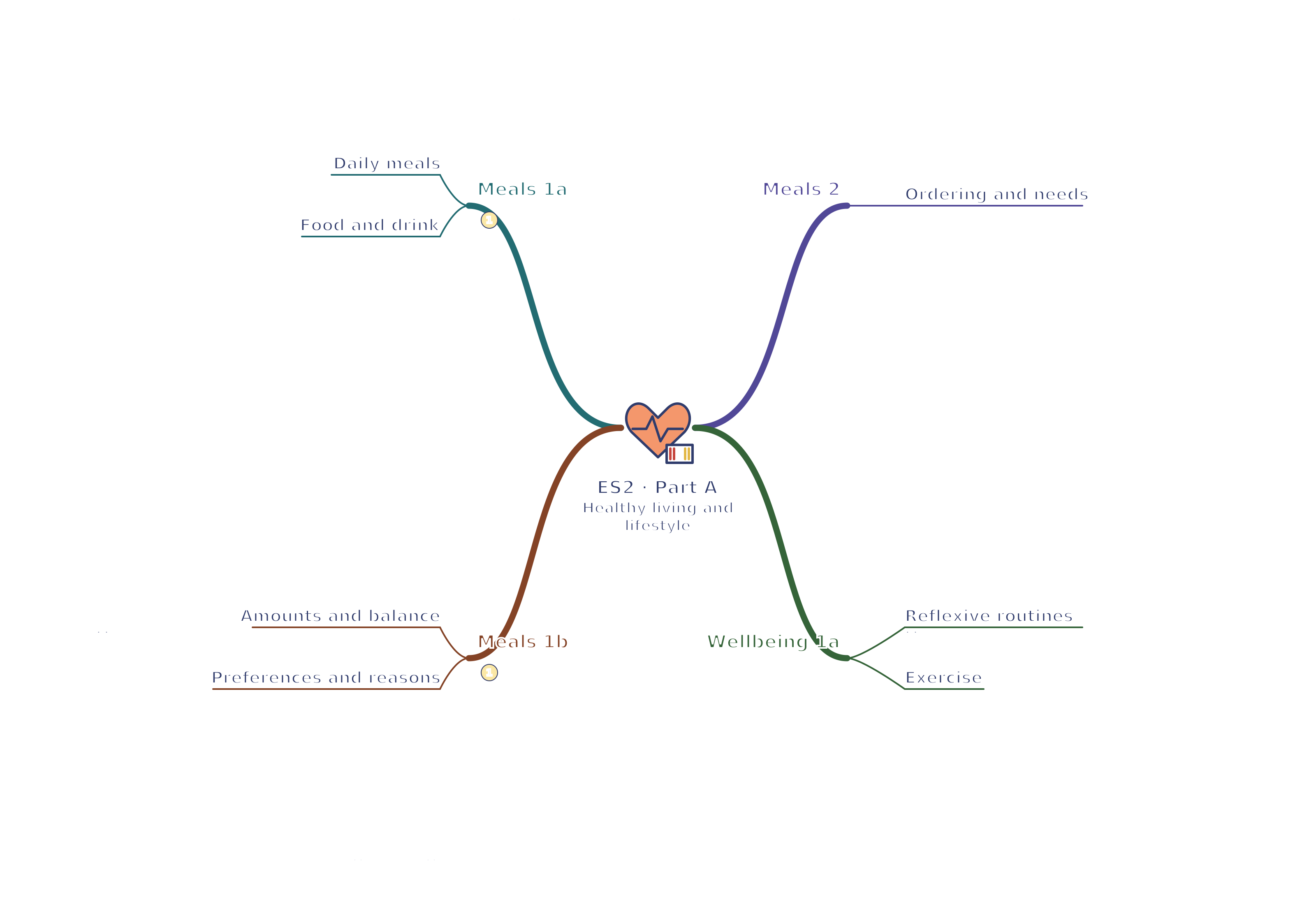
Daily meals — El desayuno, la comida/el almuerzo and la cena refer to breakfast, lunch and dinner; usage and meal times vary between Spanish-speaking communities. Desayuno a las siete means I have breakfast at seven. Do not assume every Spanish-speaking family follows one timetable.
Food and drink — Como pan y bebo agua means I eat bread and drink water. Me gusta la fruta expresses a general preference, using the article and singular gusta. Me gustan las verduras uses plural gustan. Learn gender with each noun: el pescado, la carne, los huevos.
Amounts and balance — Bebo mucha agua means I drink a lot of water; como demasiados dulces means I eat too many sweets. Mucho and demasiado agree when describing nouns: mucha agua, muchas verduras. Un poco de azúcar means a little sugar. Muy modifies an adjective: muy sano, very healthy.
Preferences and reasons — Prefiero el pescado porque es rico means I prefer fish because it is tasty. Prefiero shows e→ie in preferir. No como carne means I do not eat meat; nunca como carne means I never eat meat. Neither sentence by itself explains a person's reasons.
Ordering and needs — Quisiera una ensalada, por favor means I would like a salad, please. Sin leche means without milk; soy alérgico/alérgica a… expresses an allergy in a practice exchange. Confirm actual dietary requirements clearly with the person serving; an exercise cannot establish an ingredient list.
Routines and wellbeing
Reflexive routines — Me levanto a las siete y me acuesto a las diez means I get up at seven and go to bed at ten. Change the pronoun with the subject: me levanto, te levantas, se levanta. Acostarse changes o→ue in the present singular: me acuesto. Do not omit me.
Exercise — Hago deporte tres veces por semana means I do sport three times a week. Juego al fútbol means I play football; voy a pie al colegio means I walk to school. Jugar a contracts a + el to al. Use frequency to distinguish an occasional activity from a routine.
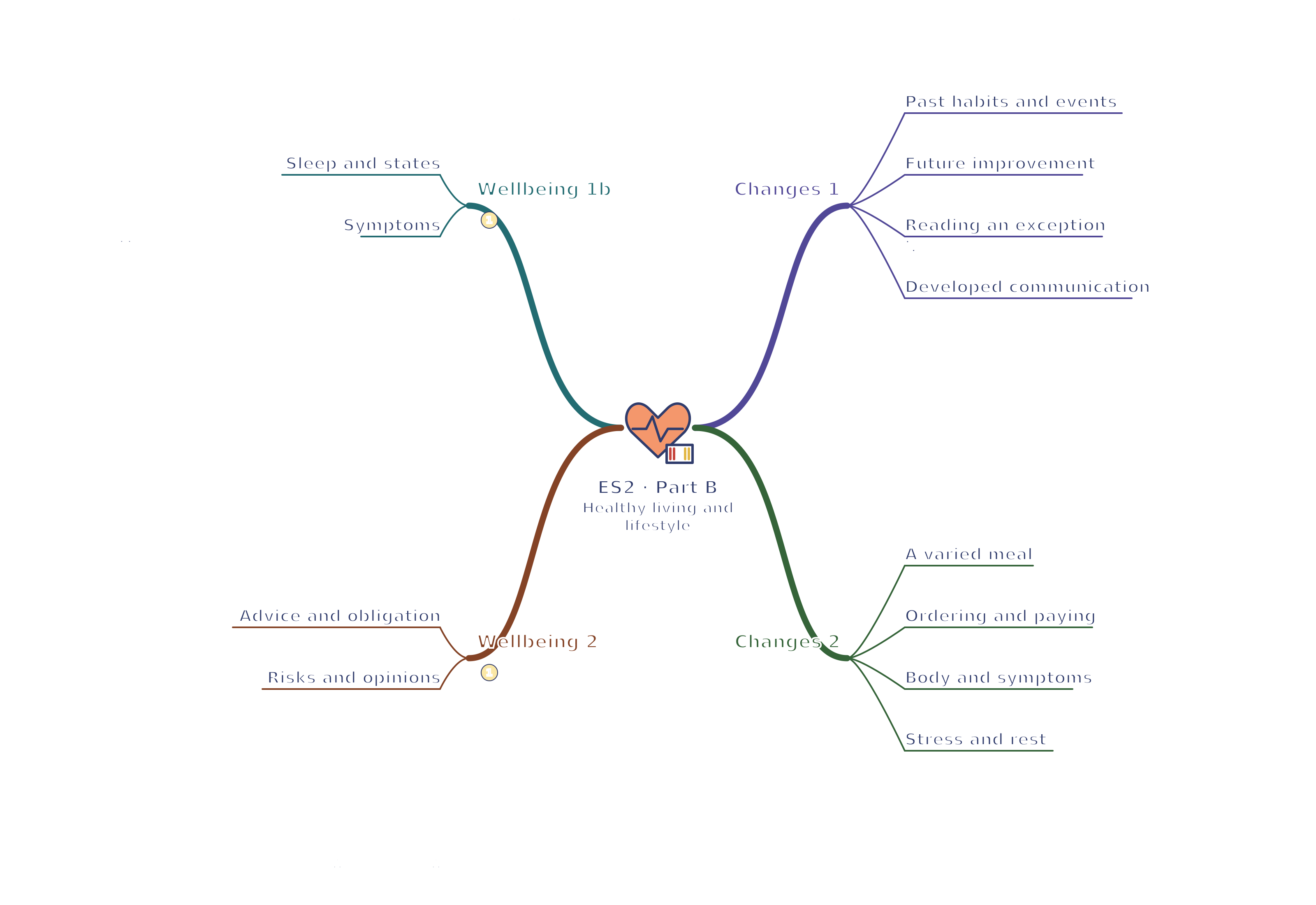
Sleep and states — Duermo ocho horas means I sleep eight hours; estoy cansado/cansada means I am tired. Tengo hambre, sed, frío, calor and miedo mean I am hungry, thirsty, cold, hot and afraid: these use tener. No tengo sueño means I am not sleepy, distinct from no duermo.
Symptoms — Me duele la cabeza means My head hurts; me duelen los pies means My feet hurt. The body part controls duele/duelen. Estoy enfermo/enferma means I am ill. Use the language to describe the given situation without diagnosing a person from a reading text.
Advice and obligation — Debes descansar means You should rest; tienes que beber agua means You have to drink water; se puede caminar means one can walk. The modal or fixed phrase takes an infinitive. No debes fumar says should not smoke; no tienes que fumar means do not have to smoke, a different meaning.
Risks and opinions — Fumar es peligroso means Smoking is dangerous. Demasiado estrés puede afectar al sueño means Too much stress can affect sleep. Use a source's qualification and distinguish an opinion from a stated finding. Language examples do not give individual health recommendations.
Changes and evidence
Past habits and events — Antes comía muchos dulces means I used to eat many sweets; ayer comí una manzana means Yesterday I ate an apple. Comía is imperfect; comí is preterite. He comido fruta hoy means I have eaten fruit today, using haber + participle. The three constructions express different viewpoints.
Future improvement — Voy a dormir más means I am going to sleep more. Me gustaría estar más activo/activa means I would like to be more active. Build a realistic language plan with an action and a reason: voy a caminar porque me gusta estar al aire libre.
Reading an exception — Normalmente voy a pie, pero ayer fui en autobús means I normally walk, but yesterday I went by bus. Fui is a completed past form of ir here. Ayer creates an exception, not a change to the normal frequency. Listen for pero and time markers before answering.
Developed communication — Explain one routine, an earlier habit and a future plan. Ask a partner how often they do an activity and respond to the answer. In translation, check quantities, reflexives and the body-part subject of doler. Actual spoken and extended written evidence is needed alongside short checks.
A varied meal — Una manzana, un plátano, arroz, pasta, pescado and pollo mean an apple, a banana, rice, pasta, fish and chicken. Como pollo con arroz means I eat chicken with rice; prefiero las manzanas expresses a general preference with the article. Zumo is juice in common Spanish usage; jugo is also used in many American varieties. Learn usable combinations, not an assumed one-to-one match for every English article.
Ordering and paying — Quisiera una botella de agua y un bocadillo means I would like a bottle of water and a filled baguette sandwich. ¿Qué lleva? asks What does it contain? La cuenta, por favor asks for the bill; ¿Puedo pagar con tarjeta? asks whether card payment is possible. Clarify the item and amount, and do not mistake a stated ingredient for a guarantee about every version of a dish.
Body and symptoms — Me duele el estómago means My stomach hurts; me duelen los dientes means My teeth hurt. Duele agrees with a singular body part; duelen with a plural. Tengo tos means I have a cough, while tengo fiebre means I have a fever. Un médico/una médica is a doctor; una farmacia a pharmacy. Interpret the supplied complaint without diagnosing its cause.
Stress and rest — Descanso cuando estoy preocupado means I rest when I am worried; preocupada agrees with a female speaker. Necesito dormir más porque tengo demasiado trabajo means I need to sleep more because I have too much work. Estoy mejor means I feel better, while soy mejor can claim I am better in a comparison. Keep the state and reason distinct from an unsupported general medical claim.
Test yourself
30 questions · Random sets of 10. These quick checks support revision; practise longer explanations and justified judgements too.
Mind map
Use the branches to recall the ideas and explain their connections. Check the revision notes for the full detail.
ES2 · 1
View ES2 · 1 mind mapOpen the full-size map to zoom. Use the printable view for A4 landscape or enlarge to A3.
 Mr Kidman's Classroom