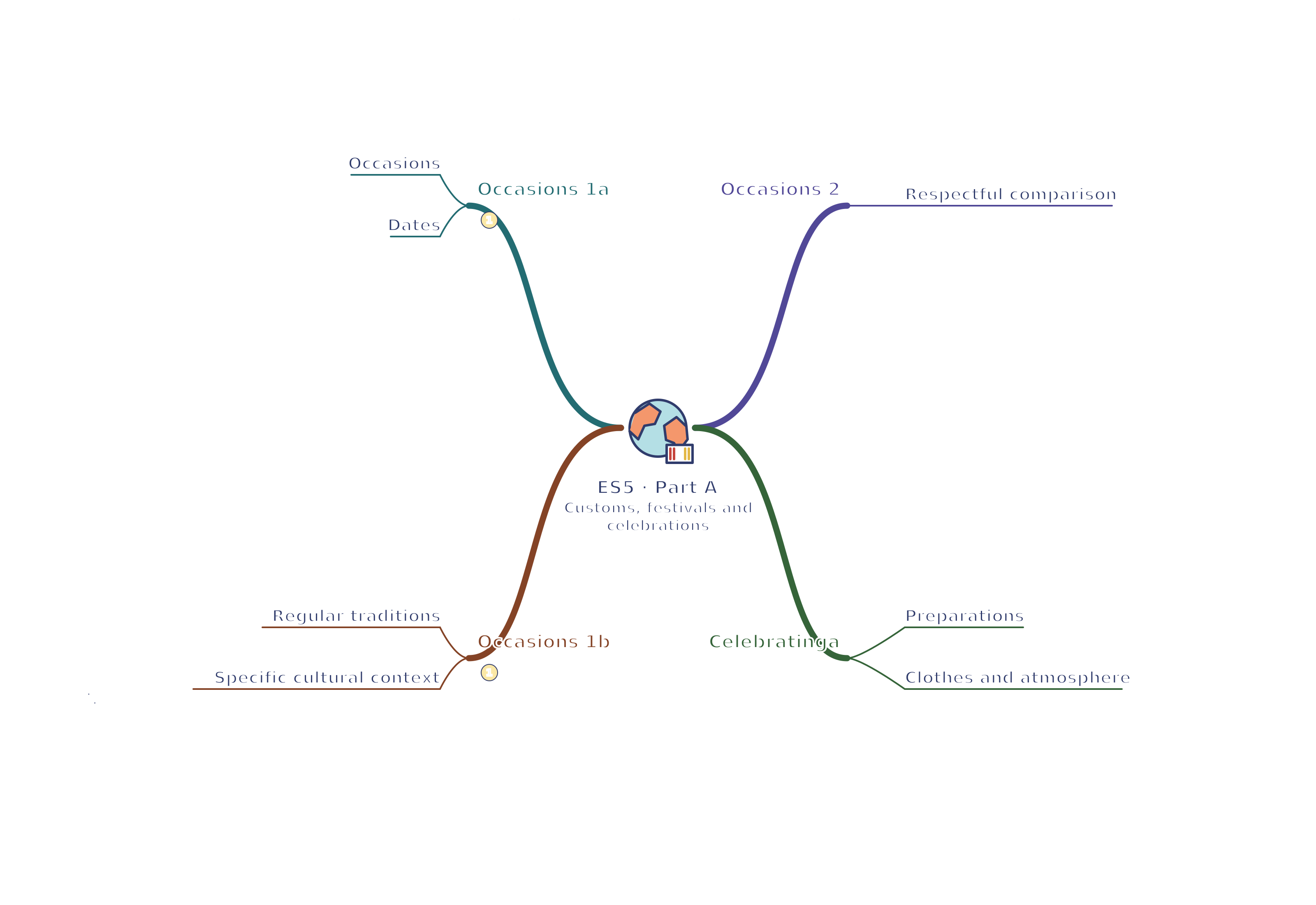
Occasions — Mi cumpleaños, una boda, una fiesta and el Año Nuevo mean my birthday, a wedding, a party and New Year. Cumplo dieciséis años en mayo means I turn sixteen in May. Fiesta can mean a party, celebration or public holiday depending on context; do not force one English equivalent.
Dates — Mi cumpleaños es el cinco de mayo means My birthday is on 5 May. Use el + number + de + month; days and months normally use lower case. El primero de enero is also used for the first of January. Ask ¿Qué fecha es? or ¿Cuándo es tu cumpleaños?
Regular traditions — En mi familia celebramos con una comida means In my family we celebrate with a meal. Se come uvas can be ungrammatical for a passive plural: use la gente come uvas at Foundation. At Higher, se comen uvas has plural agreement. Describe the given family/community rather than all speakers.
Specific cultural context — In Spain, eating twelve grapes around the midnight chimes is one New Year tradition; participation varies. La Tomatina is a local festival in Buñol, not a routine throughout the Spanish-speaking world. Use a named place and evidence when explaining a custom.
Respectful comparison — En mi familia…pero en el texto… compares your fictional or real practice with the source. Prefer diferente to mejor when simply describing a difference. Separate what a text states from an inference about every person in a country.
Describing a celebration
Preparations — Compro regalos y preparo la comida means I buy gifts and prepare food. Tenemos que decorar la casa means We have to decorate the house. Un regalo para mi hermana means a gift for my sister. Para marks recipient or purpose; porque introduces a reason clause.
Clothes and atmosphere — Llevo una camisa blanca means I wear a white shirt; hay mucha gente means There are many people. Gente is grammatically singular: la gente baila, not la gente bailan. Está animado describes a lively atmosphere in the context of the event.
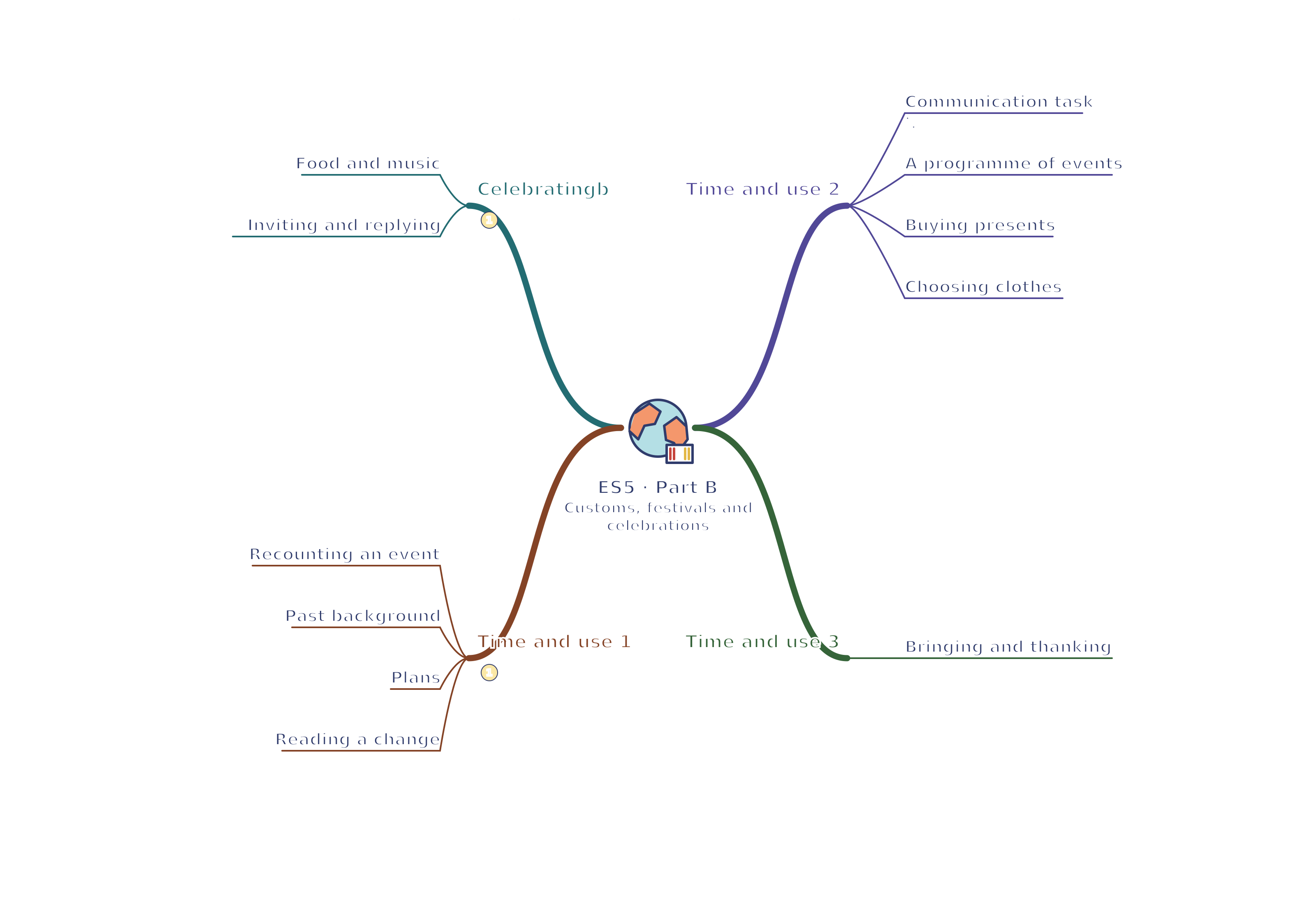
Food and music — Comemos juntos y escuchamos música means We eat together and listen to music. Me gustan los platos tradicionales means I like traditional dishes. Mucho modifies a verb in me divierto mucho, I have a lot of fun; muchos agrees with a plural noun in muchos invitados.
Inviting and replying — ¿Puedes venir a mi fiesta el sábado? asks Can you come to my party on Saturday? Gracias, pero tengo que trabajar is a refusal with a reason. ¿A qué hora empieza? asks a missing detail; distinguish an invitation from the eventual acceptance.
Time and application
Recounting an event — El año pasado celebré mi cumpleaños en casa means Last year I celebrated my birthday at home. Vinieron mis amigos means My friends came; vinieron is an irregular preterite. Recibí un libro means I received a book. Tell events in sequence and retain the subject of each verb.
Past background — Hacía buen tiempo y estaba contenta means The weather was good and I was happy. Llegó mi abuela presents her arrival as an event. Background and completed events can occur in the same account: choose each verb's viewpoint separately.
Plans — La próxima vez voy a invitar a mis primos means Next time I am going to invite my cousins. Quisiera hacer una fiesta pequeña means I would like to hold a small party. Keep personal a before the specific human object mis primos.
Reading a change — Íbamos a comer fuera, pero al final comimos en casa means We were going to eat out, but finally ate at home. Íbamos is Higher plural imperfect; recognise the contrast here as an explicitly labelled extension. What actually happened, not the abandoned plan, answers where they ate.
Communication task — Describe a named celebration with preparations, what happened and one future change. Compare two accounts using evidence; ask a partner one follow-up question. Correct dates, gente agreement and past verbs, with listener/teacher feedback on the complete response.
A programme of events — Hay un desfile por la tarde y fuegos artificiales por la noche means There is a parade in the afternoon and fireworks at night. Un espectáculo is a show; una multitud a crowd. Primero and luego order the events. A programme supports claims about this named occasion; it does not show that every community or household celebrates in the same way.
Buying presents — Busco un regalo para mi padre means I am looking for a present for my father. Comprar is buy; vender is sell. ¿Cuánto cuesta esta pulsera? asks How much does this bracelet cost? Cuesta diez euros states its price. Pagar en efectivo means pay in cash. In an exchange, distinguish the customer's request, the seller's answer and the final purchase.
Choosing clothes — Llevo un vestido azul y mi hermano lleva pantalones negros means I wear a blue dress and my brother wears black trousers. Azul becomes azules in the plural. Esta camisa es demasiado pequeña means This shirt is too small; demasiado modifies an adjective and stays unchanged here. Compare size and preference without inventing a dress code for every attendee.
Bringing and thanking — ¿Puedes traer una bebida? asks Can you bring a drink? Traer brings something towards the speaker's location; llevar can take something to another location. Gracias por el regalo means Thank you for the present. Recibo un regalo and doy un regalo distinguish receiving from giving. Use the action and viewpoint that match the person speaking.
Test yourself
30 questions · Random sets of 10. These quick checks support revision; practise longer explanations and justified judgements too.
Mind map
Use the branches to recall the ideas and explain their connections. Check the revision notes for the full detail.
ES5 · 1
View ES5 · 1 mind mapOpen the full-size map to zoom. Use the printable view for A4 landscape or enlarge to A3.
 Mr Kidman's Classroom