Mr Kidman's Classroom


Revise the key ideas
Purpose and participation
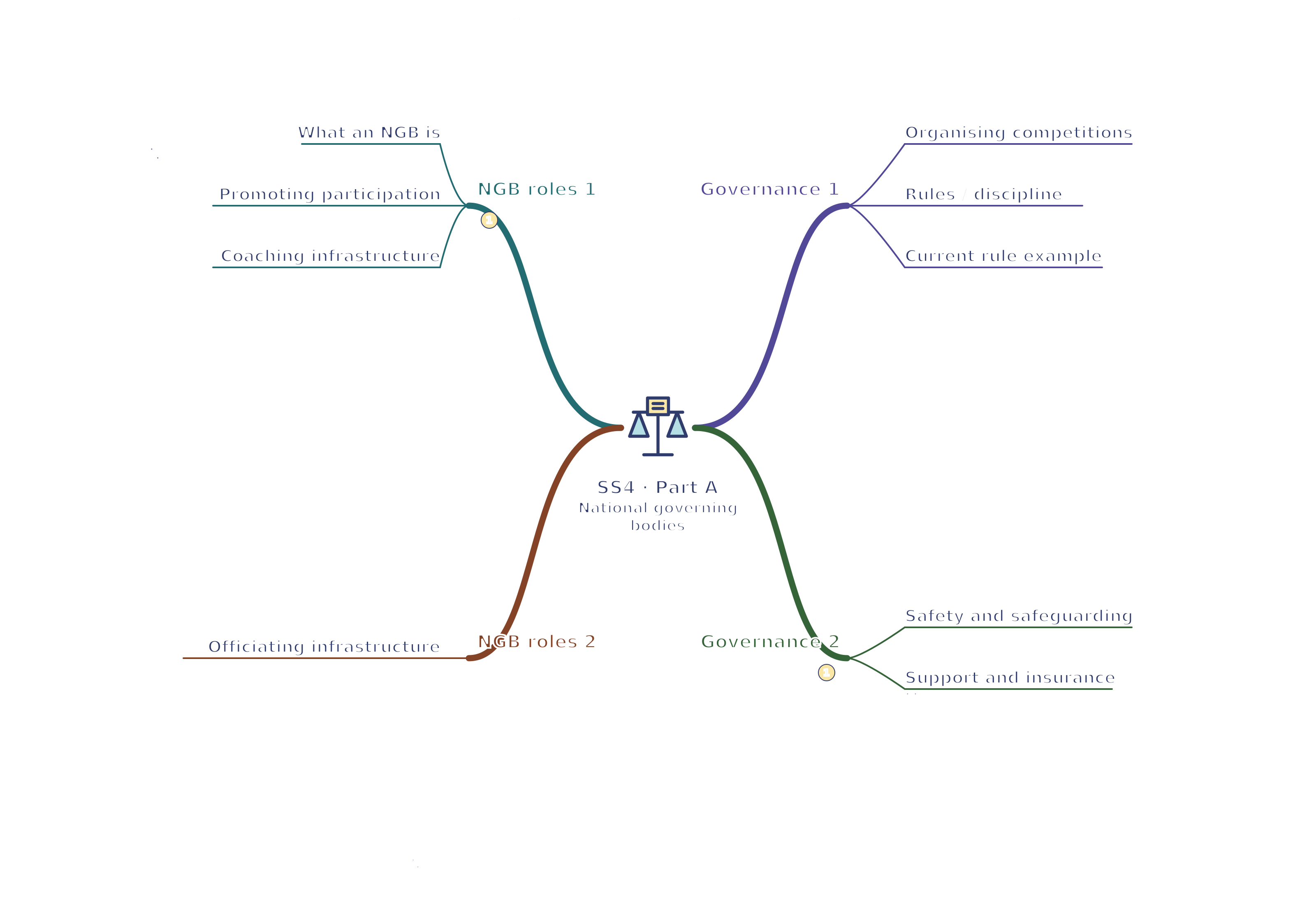
- What an NGB is — A national governing body oversees and develops a particular sport within its remit. Examples include The Football Association for football in England and the Lawn Tennis Association for tennis and padel in Great Britain. Responsibilities and geographical coverage differ. Sport England supports many sports and is not the NGB for all of them; international federations have a different remit.
NGB stands for national governing body. Its remit is the sport, geographical area and responsibilities it has authority to oversee.
- Promoting participation — An NGB can support clubs, publicise opportunities and develop inclusive entry programmes. The LTA's Free Parks Tennis offers free local sessions with equipment and other players, reducing cost and the difficulty of finding someone to play with. Its Open Court programme supports disabled participants and people with long-term health conditions. Link a named scheme to the barrier it addresses.
- Coaching infrastructure — Courses and continued development help coaches teach safely and effectively across beginner and advanced levels. In England football, Introduction to Coaching Football provides an entry route, followed by the UEFA C Diploma and further progression such as UEFA B and UEFA A. The FA Level 2 has been replaced by UEFA C; avoid presenting the old name as the current pathway.
- Officiating infrastructure — The FA Referee Course develops grassroots refereeing skills. In the men's game, progression includes Level 7 to 6, 6 to 5 and 5 to 4; the women's pathway includes 4W to 3W. Progress depends on development and assessment, not just attendance. The FA's October 2026 curriculum groups development into Foundation, Perform, Compete and Excel phases. Coaching and refereeing qualifications are different; more competent officials enable more safe competitions.
Competitions rules and safety
- Organising competitions — NGBs can set eligibility, schedules, formats, venue requirements and disciplinary procedures for their competitions. The FA runs the FA Cup; the LTA operates graded tennis and padel competition structures. A competition pathway gives participants goals and opportunities to progress, but entry and travel costs can still limit access.
- Rules and discipline — NGBs implement rules within their authority and use disciplinary procedures when rules are broken. Penalties such as fines, suspensions or disqualification must follow the applicable process. International rule makers also matter: The FA does not independently rewrite the Laws of the Game for the entire world. Consistent enforcement protects fairness and trust.
- Current rule example — The FA phased out deliberate heading in affiliated grassroots matches from under-7 to under-9 in 2024–25, adding under-10 in 2025–26 and under-11 in 2026–27. This is an age-specific English grassroots change linked to safety and development, not a heading ban in all football. Distinguish match rules from separate training guidance.
- Safety and safeguarding — NGB guidance can cover safe equipment, facility standards, coach competence, safeguarding and emergency procedures. Safeguarding protects children and adults at risk from abuse and harm; it is broader than avoiding sporting injuries. Clubs still have duties to apply guidance in actual sessions. Publishing a policy without trained staff or reporting routes is insufficient.
- Support insurance and guidance — Members may receive advice, development support, technical guidance and insurance arrangements. Technical guidance helps clubs organise facilities and activities to appropriate standards. Insurance can cover specified risks but has conditions and exclusions, so it is not a promise that every injury or loss is covered. Clubs should check the policy and their responsibilities.
Policy and funding
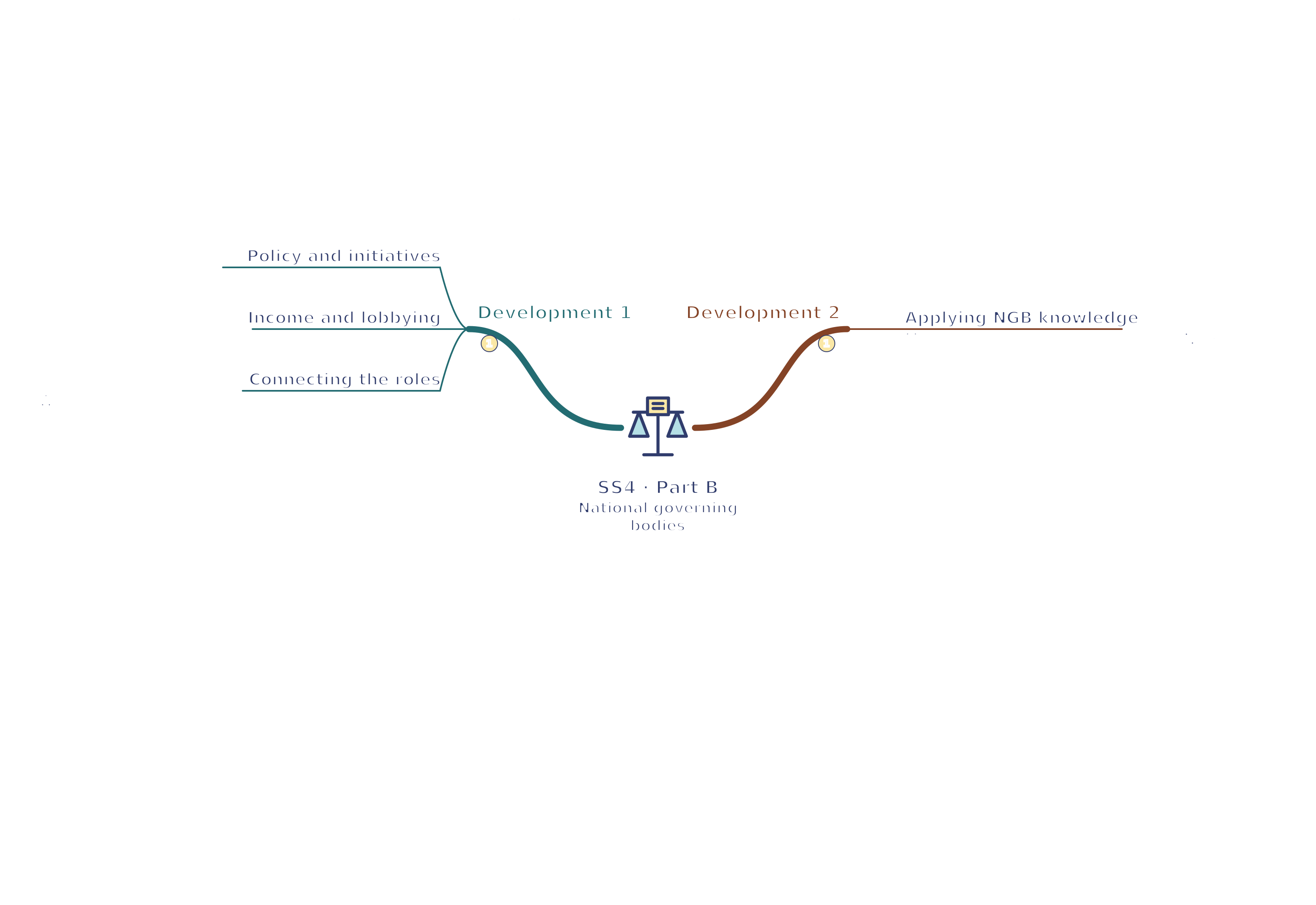
- Developing policy and initiatives — An NGB gathers evidence, consults users and sets priorities such as inclusion, safeguarding or participation growth. It then introduces initiatives and reviews their effects. The LTA's 2024–29 padel strategy focuses on facilities, workforce, participation and performance. A strategy is a plan; judge delivery through actual access and outcomes.
- Generating and lobbying for funding — Income can include membership or affiliation fees, sponsorship, event income and grants. Lobbying means making a case to decision makers for resources or support. An NGB might justify a facility grant using participation need and a realistic delivery plan. Funding is not automatic, and commercial partners may attach conditions.
Affiliation means formally joining or being recognised by an organisation; a club may pay an affiliation fee to its governing body.
- Connecting the roles — More trained coaches and officials can let clubs offer more sessions and competitions, which can increase participation and membership income. Funding can then support facilities and further training. This is a possible reinforcing relationship, not a guaranteed cycle; recruitment, accessibility and responsible governance still matter.

How NGB roles connect. Original illustration. Open full-size diagram - Applying NGB knowledge — For a fictional club lacking officials and accessible sessions, suggest referee training and an inclusive participation programme, explaining each effect. Name the relevant NGB and avoid crediting it with responsibilities outside its remit. Current courses, policies and funding programmes can change, so use the dated official examples and check updates.