Mr Kidman's Classroom



Revise the key ideas
Performance and safety
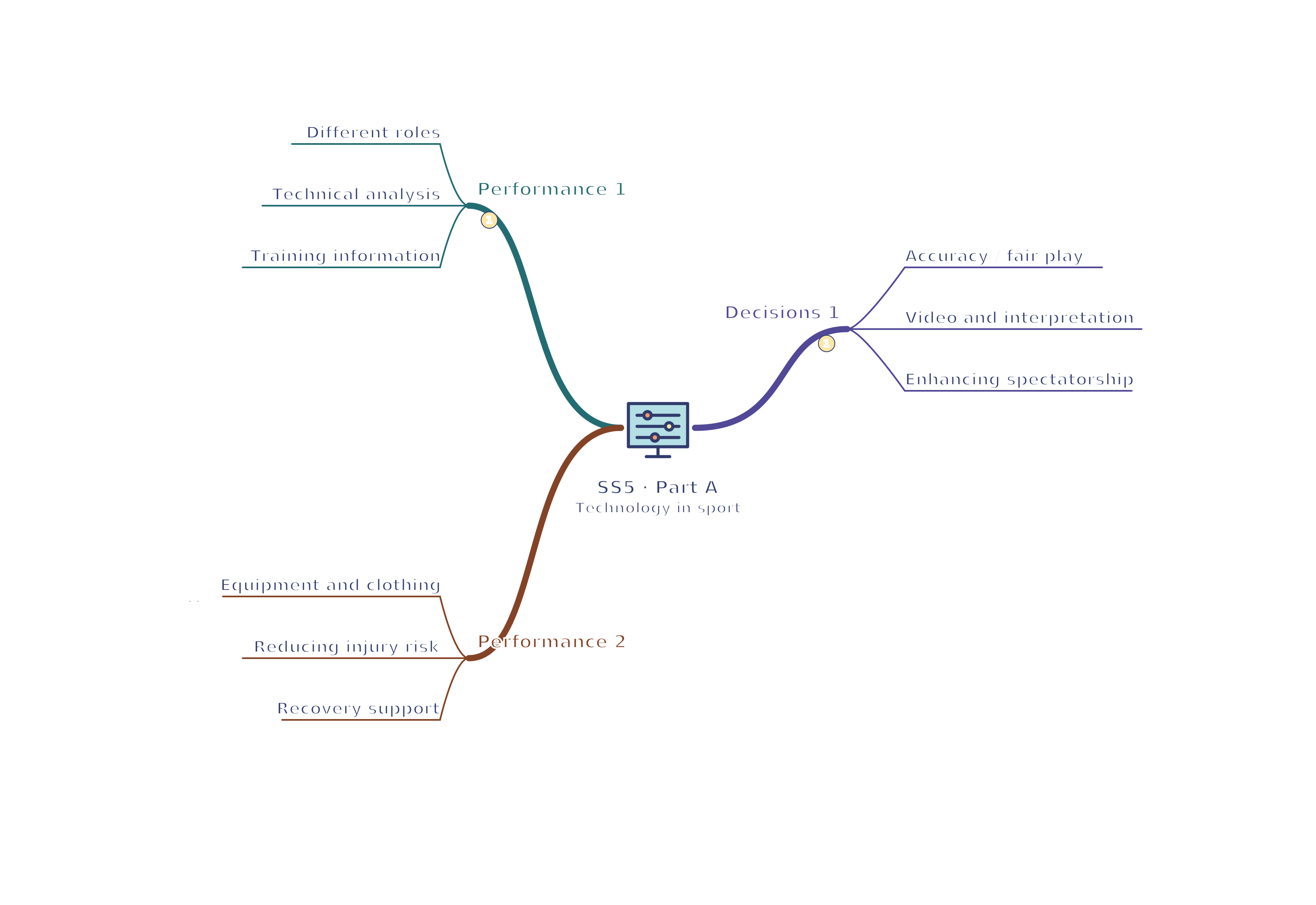
- Technology has different roles — Sport technology includes methods, equipment and clothing that improve performance, safety, officiating or spectatorship. The same tool may serve more than one role: video can improve technique and support decisions. Name the sport, the tool and how it works rather than stating vaguely that technology makes sport better.
- Technical analysis — Slow-motion video helps a swimming coach examine stroke timing, while motion analysis can identify a runner's movement pattern. Feedback can guide specific practice and comparison over time. Camera angle, measurement error and the coach's interpretation affect usefulness; collecting data does not automatically produce improvement.
- Training information — GPS tracking can estimate distance and running workload in football, and heart-rate monitoring can inform training intensity. Coaches can adjust sessions when interpreted alongside context such as fatigue and playing role. A device is not a diagnosis, and inaccurate readings or poor interpretation can lead to unsuitable decisions.
GPS stands for Global Positioning System. A tracking device uses satellite signals to estimate position and movement; the resulting estimates still need interpretation.
- Equipment and clothing — A lighter legal bicycle frame can reduce mass; aerodynamic helmets and fitted cycling clothing can reduce air resistance. Swimming suits and shoes may also influence performance, but equipment must comply with the sport's regulations. Expensive equipment does not replace skill, and access advantages can raise fairness concerns.
Aerodynamic shapes are designed to reduce resistance from the air as the cyclist moves through it.
- Reducing injury risk — Protective helmets in cycling and impact-absorbing equipment can reduce particular injury risks when suitable and correctly fitted. They cannot prevent every injury or make reckless behaviour safe. Equipment checks, rules and technique remain necessary. Match a protection claim to its purpose rather than promising complete safety.
- Recovery support — Imaging and rehabilitation technology can help professionals assess an injury and monitor recovery; controlled rehabilitation equipment can support a planned return. Quicker recovery is a potential benefit, not a guarantee for every injury. Medical judgement remains essential, and premature return can cause further harm.
Officiating and spectatorship
- Accuracy and fair play — Goal-line technology in football helps establish whether the whole ball crossed the line between the posts and under the crossbar. This answers a narrow factual issue; it does not decide every foul or offside. Accurate evidence can reduce injustice and disputes, provided equipment is functioning and the rules are applied correctly.
- Video and interpretation — Football VAR supports specified decisions, and cricket's Decision Review System uses evidence such as ball tracking and replays within its rules. Replays can correct errors, but camera angles and interpretation may leave uncertainty. Technology does not remove the official's responsibility or guarantee that every close decision becomes undisputed.
- Enhancing spectatorship — Stadium screens can show permitted replays or explain reviews; broadcasts can add slow motion, graphics and alternative camera angles. Remote viewers gain detail that is difficult to see live. Availability and use vary by competition; do not assume every stadium screen shows all reviews or that all sports use the same system.
Benefits costs and trade-offs
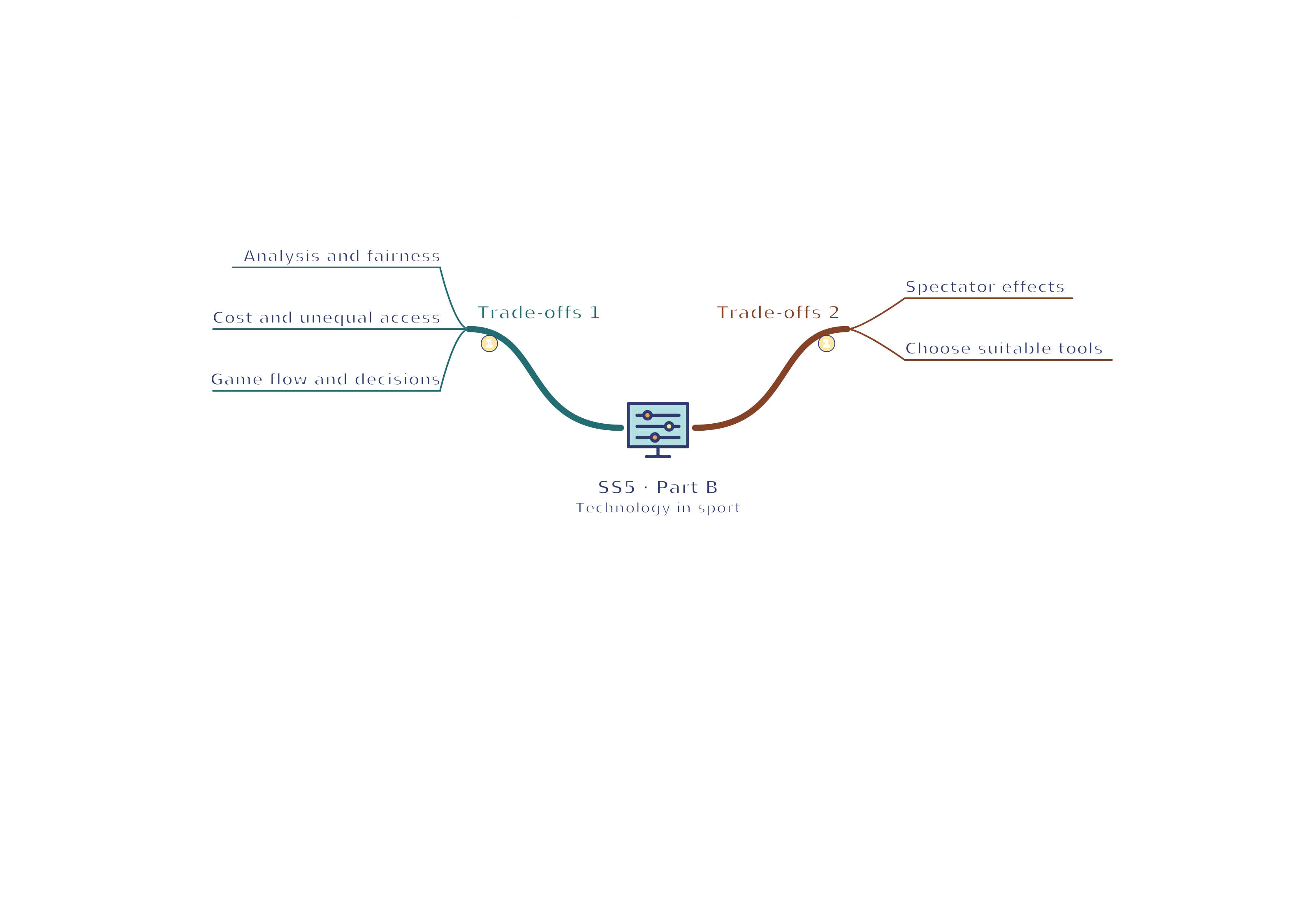
- Performance analysis and fairness — Technical analysis can identify a weakness and show whether practice improves it. More accurate officiating can protect fair results. These benefits differ: one improves the performer, the other supports the decision process. Explain a chain of cause and effect for the named sport rather than listing the words performance and accuracy.
- Cost and unequal access — Buying, maintaining and upgrading technology can be expensive, and some facilities lack trained staff or reliable systems. Wealthy clubs may afford detailed analysis that grassroots teams cannot. Availability means being able to obtain and use a tool; affordability means being able to pay for it. A system can be available nationally but unaffordable locally.
- Game flow and decisions — Reviews can interrupt rhythm, delay celebrations and leave live spectators unsure why play stopped. A replay may improve a factual decision while still not settling the best interpretation of a subjective rule. Clear limits, training and communication help, but they do not eliminate every trade-off between accuracy and flow.
- Spectator benefits and drawbacks — Some spectators enjoy replay detail, statistics and explanations; others dislike interruptions, screen dependence or paying for extra services. People at home and in a stadium may receive different information. Accessible captions and clear announcements can improve inclusion. Judge the experience for a specified audience rather than assuming every viewer benefits equally.
- Choosing suitable technology — For a fictional community tennis club, affordable video on a suitable device may offer useful coaching feedback, while a costly automated officiating system may be unrealistic. Compare the purpose, benefit, reliability, cost, access and effect on play. Conclude which option fits the context and recognise a remaining limitation.
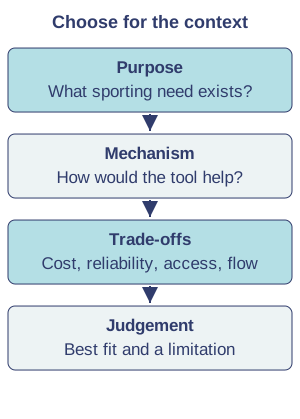
Judge technology in context. Original illustration. Open full-size diagram
Performance and safety
- Compare useful evidence — A coach records the same skill before and after practice using consistent camera position and comparable conditions. Video may reveal a change in technique, but one improved attempt does not establish that training caused lasting improvement. Compare repeated attempts and relevant performance measures, and consider reliability, affordability and access. An officiating replay serves a different purpose: its accuracy and effect on game flow should be judged against the sport's rules rather than coaching progress.