Mr Kidman's Classroom


Revise the key ideas
Economic and political influences
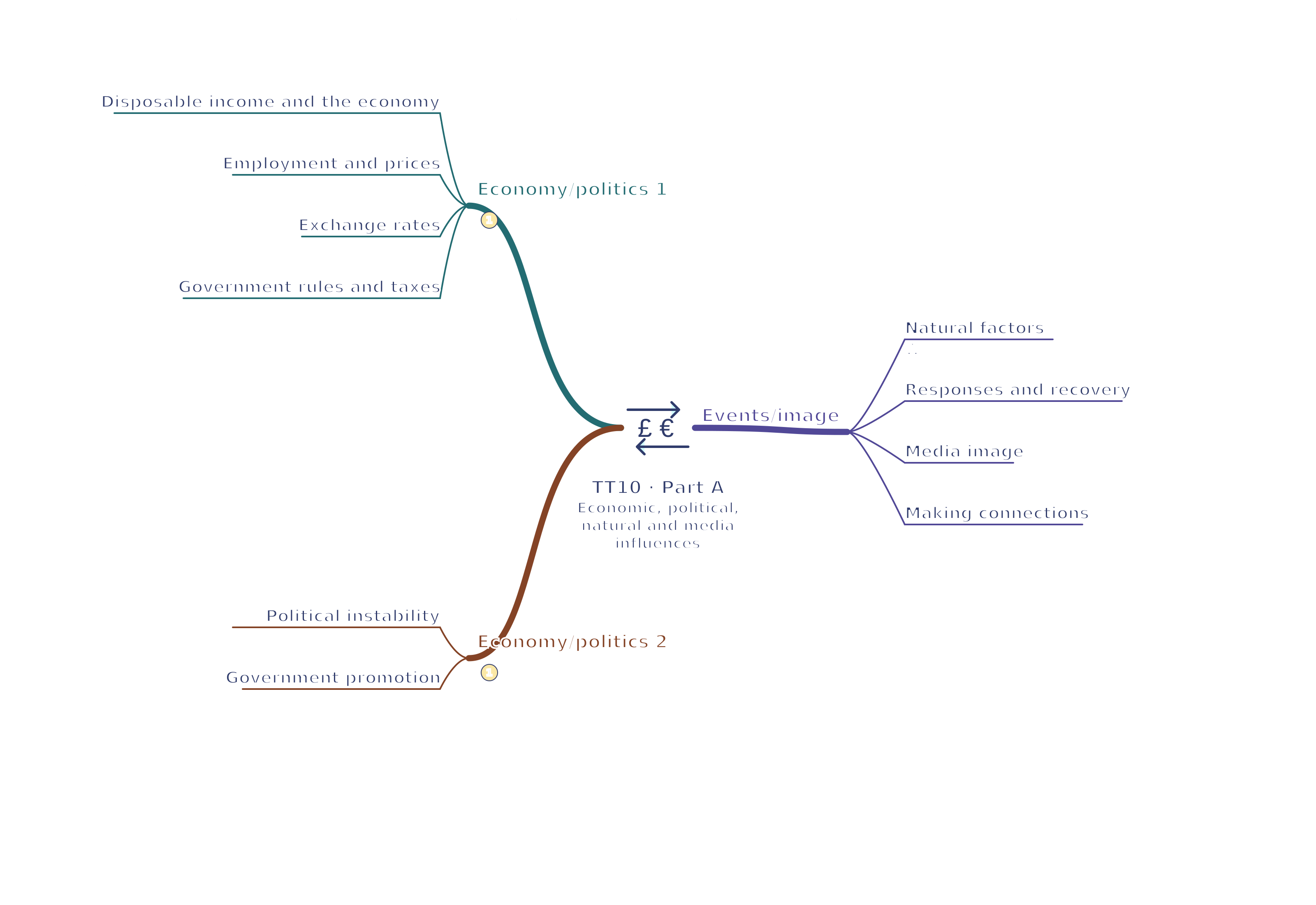
- Disposable income and the economy — Disposable income is income available after direct taxes; essential living costs then constrain what remains for holidays. During a recession, employment insecurity may encourage cheaper or shorter trips. A boom can support spending, although benefits vary between households. Explain the effect on a particular market rather than assuming everyone reacts equally.
A recession is a period of economic decline; a boom is a period of strong economic activity and growth. Their effects on jobs and spending help explain changes in holiday demand.
- Employment and prices — Job loss can reduce holiday budgets; rising living costs can reduce discretionary spending even if income is unchanged. Higher fuel prices can raise transport operating costs and fares. Operators may change routes, prices or capacity. Customers may choose domestic trips, travel off-peak or postpone a visit.
Discretionary spending is spending a household can choose after essential costs and commitments. It can fall even when after-tax income has not changed.
- Exchange rates — If £1 buys €1.20, £500 buys €600 before fees. If it later buys €1.10, the same £500 buys €550. The pound buys fewer euros, making euro-priced spending dearer for that UK visitor. Visitors arriving from abroad may experience the opposite effect. Exchange rates are illustrative, not live quotations.
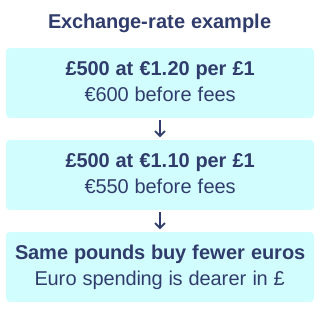
Illustrative worked values; not a live quotation. - Government rules and taxes — Entry requirements, taxes, planning controls and operational rules affect costs and access. A visa process can add expense and waiting time; public investment can improve transport. Health, safety, employment and equality protections support users and workers. For a real journey consult current official information; these notes do not state current legal entitlements.
- Political instability — Unrest or conflict may damage confidence, interrupt transport, cancel holidays and reduce local income. Organisations may change destinations and support affected customers. Repatriation means returning people to their home country. A destination's image can remain affected after immediate disruption ends, so recovery may require more than reopening one hotel.
- Government promotion — Funding, campaigns, partnerships, infrastructure and incentives can encourage visits and investment. New services may benefit residents as well as tourists. Costs and environmental pressure still need evaluation. A promotional campaign cannot overcome every access, security or capacity problem by itself.
Natural events and media
- Natural factors — Floods, storms, earthquakes, volcanic activity and extreme temperatures can disrupt tourism. Seasonal weather can create attractive activities as well as risks. An event may close a transport route, damage buildings and interrupt water supplies at once. Distinguish the physical event from the vulnerability and preparedness of the destination.
Vulnerability concerns how easily people, buildings or services can be harmed. Preparedness concerns the plans and resources ready before an event, such as an agreed warning and evacuation arrangement.
- Responses and recovery — An organisation may suspend an excursion, reroute travel or arrange safe accommodation. A destination may rebuild infrastructure, improve warning systems or alter building design. Recovery needs staff, finance and communication. Reopening quickly without addressing the original vulnerability can expose visitors and residents to another disruption.
- Media image — News, films, television, guidebooks, magazines, social platforms and websites can create positive or negative destination images. A film location may attract new visitors; repeated negative coverage can discourage bookings. A vivid report may receive more attention than typical conditions. Check date, source and context before treating an image as evidence.
- Making connections — A fictional rise in fuel cost raises coach fares, reducing budget-group bookings and causing an operator to combine departures. The effect depends on alternatives and the importance of the journey. Identify factor, consequence, affected stakeholder and response, then consider a drawback. Several influences can reinforce or offset one another.
A stakeholder is a person or organisation affected by a decision or event, such as a coach operator, passenger, employee or resident.