Mr Kidman's Classroom



Revise the key ideas
Ownership and purpose
- Private organisations — Private businesses are owned by individuals or shareholders. They may range from one guesthouse to an international hotel group. Revenue comes mainly from selling products and services; profit is revenue minus costs. Private does not mean small, secret or necessarily expensive, and a large sales figure does not establish a profit.
A shareholder owns a share of a company. Several shareholders can own parts of one large business, unlike a business owned by a single individual.
- Public organisations — Government-funded or government-owned organisations may provide transport, museums, information or destination promotion. Access, education and local benefit can matter alongside financial control. Public ownership does not necessarily mean free admission. Check the actual owner and funding instead of assuming every museum or railway has the same ownership.
- Voluntary organisations — Trusts, charities and membership bodies can preserve heritage, protect wildlife or widen access. Donations, grants, subscriptions, admission fees and sales help fund the cause. Paid staff may work alongside volunteers. A voluntary organisation can earn a surplus; the important distinction is how it uses that surplus to support its purpose.
- Financial aims — A fictional attraction receives £8,000 from tickets and spends £6,500 on operating costs, leaving £1,500 before other relevant costs. Increasing revenue does not guarantee increasing profit if costs rise faster. Breaking even means total revenue equals total costs. Reducing losses may be a realistic short-term objective.
- Market share and assets — Market share is an organisation's proportion of a defined market. Growth can come from gaining customers or entering new markets. Managing assets means using resources such as buildings and vehicles effectively. Selling more tickets at a steep discount may raise visitor numbers while reducing revenue per visitor.
If a fictional operator makes 20 of the 100 bookings in a defined market and period, its share by booking number is 20%. The market and measure must be stated.
- Strategic aims — Quality, value, loyalty, brand awareness, expansion, diversification, technology and social responsibility can guide decisions. Diversification adds different products or markets; expansion increases the scale of activity. A heritage charity may improve access while protecting fragile rooms. Aims can conflict, so explain how a choice balances them.
Relationships and dependencies
- Interrelationships — A fictional hotel and attraction jointly advertise a short-break offer. The hotel gains bookings and the attraction gains admissions. Joint promotion can share costs and reach new customers, but partners must agree responsibilities and avoid misleading claims. A useful explanation identifies what each organisation contributes and receives.
- Interdependencies — A tour operator needs an airline to provide the contracted flights and a hotel to supply rooms. If either fails, the package may be disrupted. Dependency is stronger than simply appearing in the same advertisement. A supplier delay can cause costs and reputational damage elsewhere in the visitor's journey.

Original teaching schematic. Read with the explanation and its qualifications. - Ways of cooperating — Businesses may share buying, staff incentives, customer service, marketing, expertise or equipment. Bulk purchasing can lower unit costs, while a joint information desk can improve consistency. Shared systems also need training and reliable data. A saving is only useful if the shared service still meets customer needs.
- Explaining a partnership — A fictional operator buys rooms in advance and promotes the hotel in its brochure. The hotel gains predictable occupancy; the operator secures capacity. Unused rooms or dependence on one buyer create risk. Explain the chain from agreement to outcome rather than saying only that working together is good.
Hotel occupancy concerns how many or what proportion of the available rooms are occupied during a stated period.
Ownership and purpose
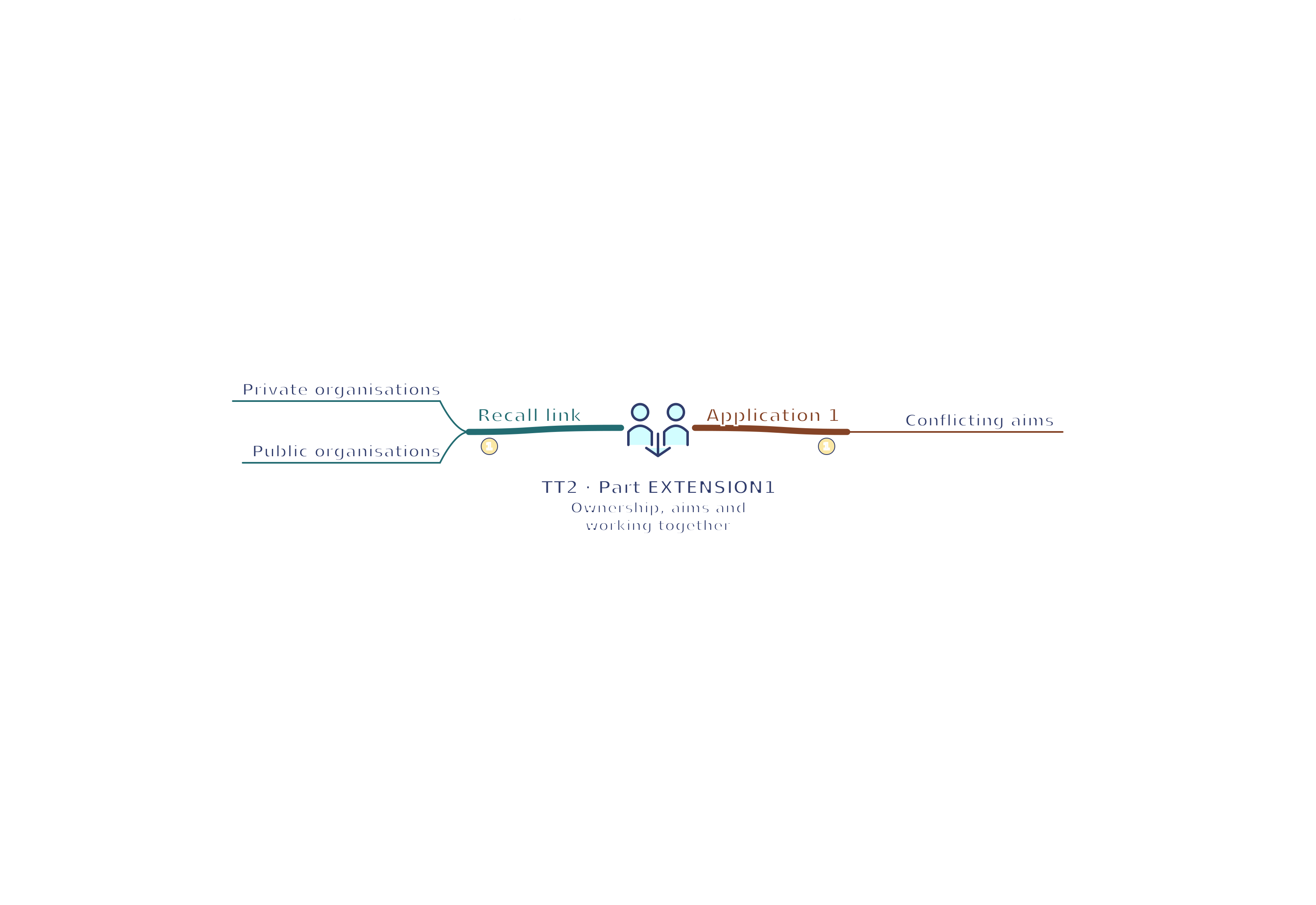
- Conflicting aims — A heritage attraction wants more revenue and better access while protecting fragile rooms. A discount may increase admissions but lower revenue per visitor and create crowding. Timed visits may protect the site but reduce spontaneous bookings. Compare total income, operating costs, visitor experience and conservation outcomes. Expansion increases scale; diversification adds a different product or market, such as a new educational service. Neither automatically raises profit. A recommendation should identify the attraction's priority and the evidence needed to judge success.