Mr Kidman's Classroom



Revise the key ideas
Travel options and routes
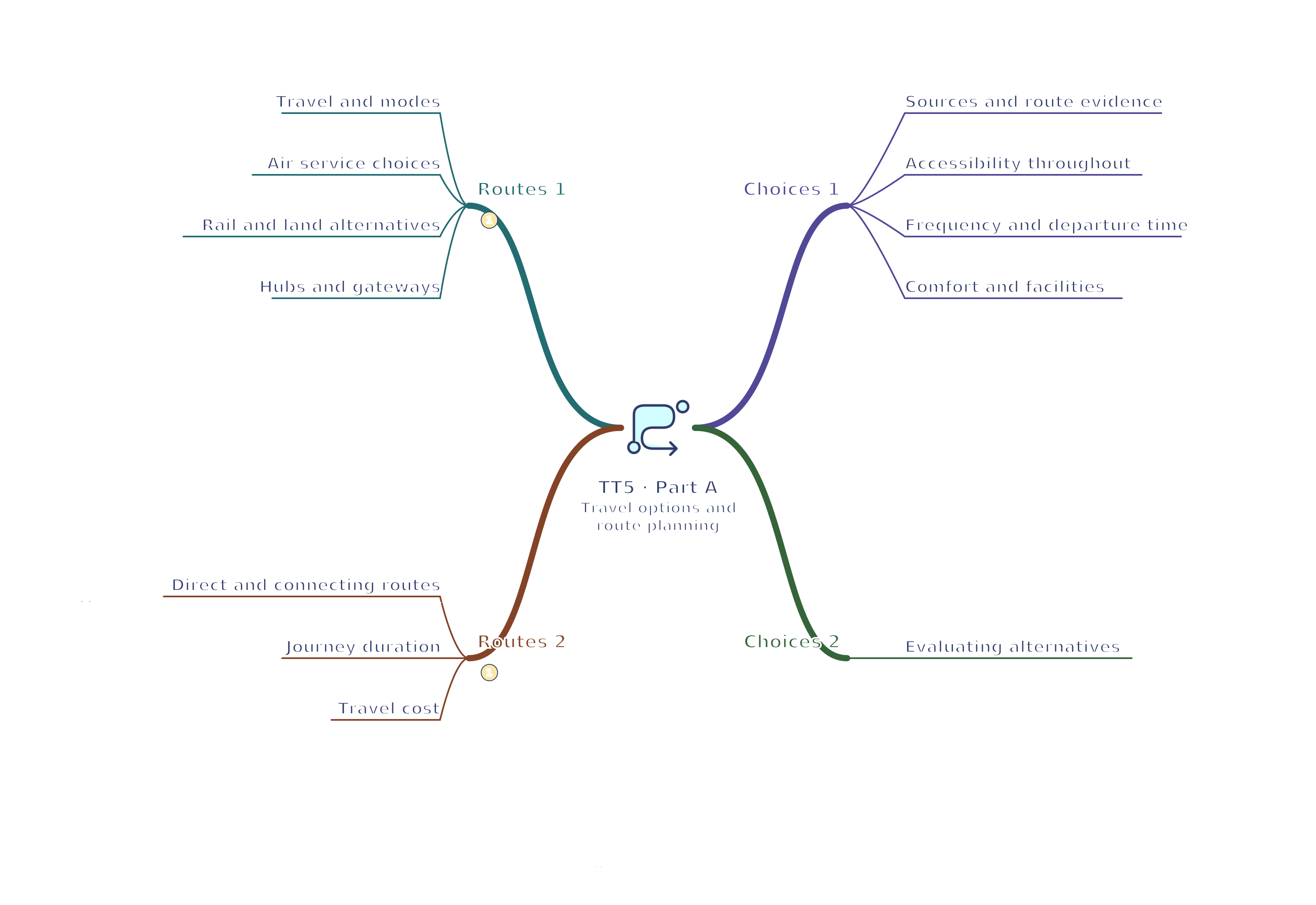
- Travel and modes — Travel means moving between places. Road options include private car, taxi, coach and hire car; rail, air and sea provide alternatives. A route often uses more than one mode. An air journey still needs travel to the airport and onward from arrival, so compare door-to-door journeys.
- Air service choices — Short-haul and long-haul describe broad journey lengths rather than airline ownership. Scheduled flights operate to a published schedule; charter flights are arranged for a particular customer or programme. Budget airlines often sell a basic fare with extras separately. A charter can still have fixed departure times, and a low base fare need not give the lowest complete cost.
- Rail and land alternatives — Regional and national trains, international Channel Tunnel services, heritage railways and sleepers serve different routes and purposes. Overnight accommodation can save a hotel night but needs suitable sleeping arrangements. Buses, coaches, taxis, hire cars, cycling and walking can connect the final stages. One-way and return products should be compared with the actual itinerary.
An itinerary is a travel plan showing the journey’s stages, dates and timings.
- Hubs and gateways — Airports, railway stations, coach stations and ferry ports can serve as gateways or hubs. A hub links services and may increase destination choice, but a connection introduces waiting and missed-connection risk. The largest hub is not always the most convenient. Check terminals, transfer time, accessibility and ticket arrangements.
A gateway is an entry or exit point for a destination. A hub connects services so passengers can transfer between routes; the same place may perform both roles.
- Direct and connecting routes — A direct route avoids changing the principal service, while a connecting route requires interchange. A connecting fare may be cheaper or reach more places, but adds handling and timing issues. Separate bookings may have different protection and support. Do not assume an airline or operator must wait for a late passenger.
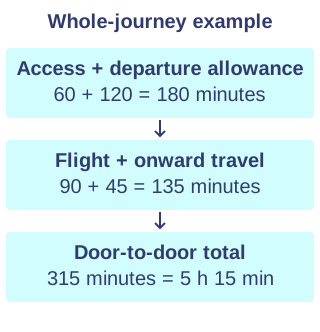
- Journey duration — A fictional flight lasts 90 minutes, but reaching the airport takes 60 minutes, pre-departure allowance is 120 minutes and onward travel takes 45 minutes: 315 minutes, or 5 hours 15 minutes, before other delays. Compare this with a complete rail journey rather than its travel time alone. State every allowance.
Illustrative worked values; not a live quotation. - Travel cost — A fictional fare of £70 plus £25 baggage and £15 transfer costs £110 per person before other items. For four people it is £440. Parking, fuel, tolls, seat selection and local transport may change the comparison. Use the same party size and inclusions, and distinguish per-person from per-vehicle charges.
Research and recommendation
- Sources and route evidence — Timetables, route maps, airport and port information, operator websites and journey planners help establish options. Record travel date, departure and arrival points, changes, duration and cost. Third-party results may omit extras or restrictions. Verify an option with the actual provider before recommending a real booking.
- Accessibility throughout — Check step-free access, boarding arrangements, luggage handling, suitable toilets and assistance at each interchange. A station lift outage or an inaccessible transfer can make an otherwise suitable route fail. Ask what the traveller needs and confirm arrangements; do not infer ability from age or a broad disability label.
- Frequency and departure time — A frequent service may offer alternatives after disruption. An early departure might require an overnight stay or costly taxi. A late arrival may miss the last local bus. Consider the visitor's dates, connections, rest and check-in arrangements rather than treating the shortest scheduled time as the only criterion.
- Comfort and facilities — Seat space, food, toilets, sleeper accommodation, entertainment, Wi-Fi and luggage arrangements can matter on longer journeys. Cars offer flexibility but require driving and parking; rail can offer city-centre arrivals but may need changes; sea crossings can carry vehicles but take time. No mode is universally best.
- Evaluating alternatives — For a fictional family with luggage, a slightly dearer direct route could reduce difficult changes. For a solo visitor with flexible dates, a connecting route may be affordable. Compare at least two credible options against the same priorities and identify a limitation. Timetables, fares and entry rules in exercises are illustrative unless clearly researched and dated.