Mr Kidman's Classroom



Revise the key ideas
Businesses and ownership
- Goods and services — A business organises resources to supply something customers value. A salon supplies cutting services and may also sell shampoo; a manufacturer makes products, while a distributor moves them to retailers. Owners may seek income, independence, growth or a social purpose.
- Sole trader — One person owns a sole-trader business and controls its decisions. Starting can be straightforward, but the owner has unlimited liability: business debts can put personal assets at risk. Employing staff does not turn the business into a partnership.
- Partnership — Partners share ownership, work and profits. Different skills and finance can help, but disagreements can delay decisions and ordinary partners have unlimited liability. A written agreement should explain responsibilities, profit sharing and what happens if someone leaves.
- Limited companies — A private limited company has a separate legal identity and normally offers shareholders limited liability. Its shares are not offered to the general public. A public limited company can offer shares publicly, raising more capital but facing greater reporting obligations and possible loss of control.
A shareholder owns a share, or part, of a company. Limited liability normally limits the owner’s financial exposure to the amount invested or agreed, rather than all personal possessions. Capital means money or other resources used to support the business.
- Franchises and concessions — A franchisee pays to use a franchisor's brand and system, gaining recognition and support but accepting fees and restrictions. A concession operates within another business's space, such as a beauty counter inside a department store. Neither label alone determines the legal ownership structure.
- Independent and social businesses — An independent salon chooses its own identity and suppliers. Freelancers work for themselves, perhaps visiting clients or renting a chair; they must still manage insurance, tax and safe working. A not-for-profit organisation reinvests surplus in its purpose rather than distributing it to private owners.
Services and careers
- Sector breadth — Hair salons, barbers, spas, nail and brow bars, complementary therapy centres and aesthetic clinics meet different needs. A spa may combine relaxation services with a hotel; a specialist clinic needs appropriately qualified staff. A technical award is an introduction, not a licence to perform every service.
- Hair and barber services — Hairdressing includes cleansing, cutting, colouring, perming, relaxing, extensions, braiding, wrapping and styling. Barbering includes fades, patterns, beard trimming, shaving and styling. Thermal styling uses heat; perming and relaxing change bonds chemically and require appropriate training.
- Beauty and spa services — Beauty therapy includes facials, eye treatments, hair removal, tanning and make-up. Spa treatments may include massage, body wraps and hydrotherapy. Nails include manicure, pedicure, gel polish, enhancements and art; match staff competence and equipment to the service.
Hydrotherapy uses water as part of a treatment. Manicure concerns hands and fingernails; pedicure concerns feet and toenails. These names do not remove the need for appropriate training.
- Make-up specialisms — Bridal work balances longevity and client preferences; photographic make-up responds to lighting and cameras. Fashion, theatrical and media work may use stronger visual effects, camouflage or prosthetics. Their purposes differ, so one product or application method will not suit every brief.
Prosthetics are artificial pieces used here to change a performer’s appearance, such as an added character nose.
- Training and progression — Further education, apprenticeships, private training and higher education offer different routes; check current entry and course availability rather than assuming any named route is always offered. A junior stylist may progress to senior, consultant, educator, manager or owner. Sales consultants and colour technicians use specialist knowledge too.
- Employment and interdependence — Employees work under a contract; self-employed people manage their own business obligations. Salons depend on manufacturers, distributors, retail, education, fashion, leisure, tourism, theatre and health-related specialists. A wedding booking may involve a stylist, hotel, photographer and dress supplier: disruption to one affects the others.
Economy and responsible practice
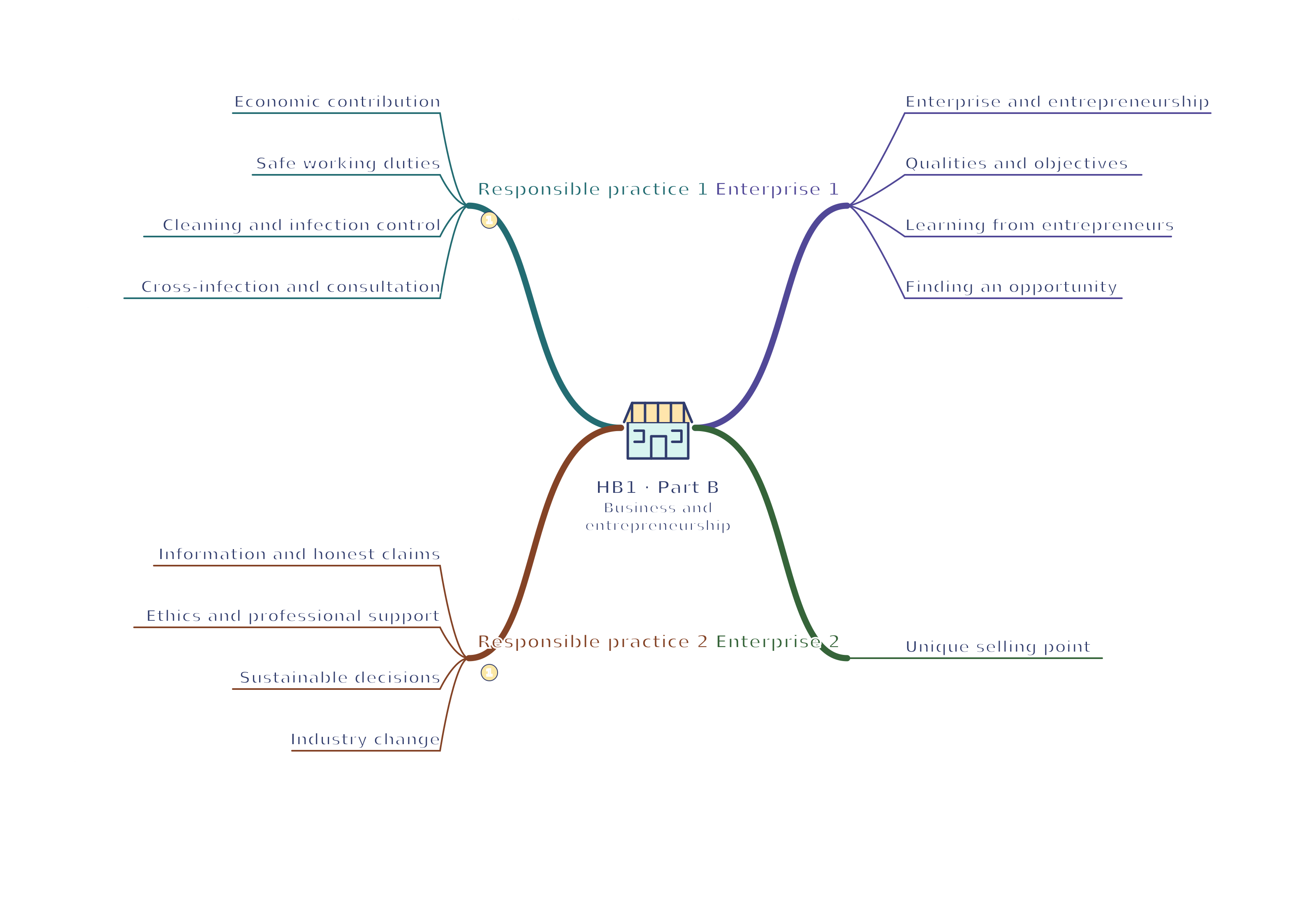
- Economic contribution — Hair and beauty create jobs, spending, tax revenue and demand for suppliers. GDP measures the value of production, not simply a count of salons. Greater customer choice can stimulate competition, but headline economic statistics need a source, date and clear definition of what is included.
GDP stands for gross domestic product: a measure of the value of final goods and services produced within an economy over a period.
- Safe working duties — The Health and Safety at Work Act establishes duties to protect workers and others. Identify hazards, assess risks and control exposure: secure cables, maintain equipment, store chemicals correctly and use suitable PPE. PPE complements safe methods; gloves alone do not make an unsafe procedure acceptable.
PPE means personal protective equipment, such as suitable gloves or eye protection chosen for the risk. A hazard can cause harm; a risk assessment considers how harm might occur and what controls are needed.
- Cleaning and infection control — Cleaning removes dirt; sanitisation reduces microbial contamination; disinfection destroys many microorganisms but not necessarily all spores. Sterilisation destroys viable microorganisms including spores when correctly validated. Clean tools before further processing and follow product contact times and equipment instructions.
Microorganisms are organisms too small to see individually without magnification. Microbial means relating to these organisms. Spores are resistant forms produced by some microorganisms, which is why disinfection and sterilisation are distinguished.
- Cross-infection and consultation — Cross-infection transfers pathogens between people, tools or surfaces. Hand hygiene, single-use items where appropriate, clean linen and correct tool processing break routes of transfer. If an infectious condition is suspected, stop the affected service and follow referral procedures; do not diagnose or hide it with a product.
Pathogens are disease-causing microorganisms. Referral means directing a concern to a suitably qualified person rather than trying to diagnose or treat it yourself.
- Information and honest claims — Client records can contain sensitive information. UK data protection requires appropriate purpose, access control, secure storage and retention; consent to a photograph is not automatic permission to post it. Trade-description principles require truthful claims: do not promise a product cures disease or produces impossible results.
- Ethics and professional support — A code of practice describes expected methods; a code of ethics guides fair, respectful decisions. Professional associations may provide training, guidance and networking, while membership does not remove legal duties. Explain prices clearly, respect confidentiality and work within competence.
- Sustainable decisions — Social sustainability concerns people; ecological sustainability concerns ecosystems and resources; economic sustainability concerns long-term viability. Reducing water, energy and waste may lower costs, while refill systems require hygiene controls. Renewable energy replenishes naturally; fossil fuels are finite. Include disposal impacts and social costs borne by others.
Viability means being able to continue operating. An ecosystem consists of living organisms interacting with one another and their environment.
- Industry change — Over recent decades, general salons have been joined by specialist blow-dry, brow and nail bars, expanded spas and aesthetic clinics. Hair replacement, nail systems, airbrush make-up, lash treatments and laser technology broaden services. New technology also creates training, maintenance and safety needs; novelty is not proof of benefit.
Enterprise and opportunities
- Enterprise and entrepreneurship — Enterprise turns ideas into organised action. An entrepreneur identifies an opportunity and brings resources together while accepting uncertainty. Innovation might improve booking or accessibility rather than invent a chemical. Successful ventures can create employment and choice, but profits and survival are never guaranteed.
- Qualities and objectives — Organisation, communication, analysis, creativity and persistence help an entrepreneur test and improve an idea. Calculated risk-taking uses evidence and affordable limits. Objectives may include flexibility, independence, personal satisfaction, profit or ethical change; these aims can conflict when demand rises or costs increase.
- Learning from entrepreneurs — Vidal Sassoon linked distinctive cutting with training and a wider brand; Anita Roddick connected retail cosmetics with ethical campaigning. Their examples show different ways of differentiating an offer, not a guarantee that copying a famous brand will work locally. Evaluate a specific decision and its context.
- Finding an opportunity — A gap exists when an unmet customer need can be served viably. Interviews might reveal demand for evening appointments, but check the size of that demand, competitors, staffing and transport. Following a hobby generates an idea; research tests whether enough people would pay for it.
- Unique selling point — A USP explains a meaningful difference, such as trained expertise in a particular service or convenient opening hours. It should matter to the target customer and be deliverable. Saying 'best salon' gives no testable reason to choose it; a cheap price alone may be easily copied.
Business planning and finance
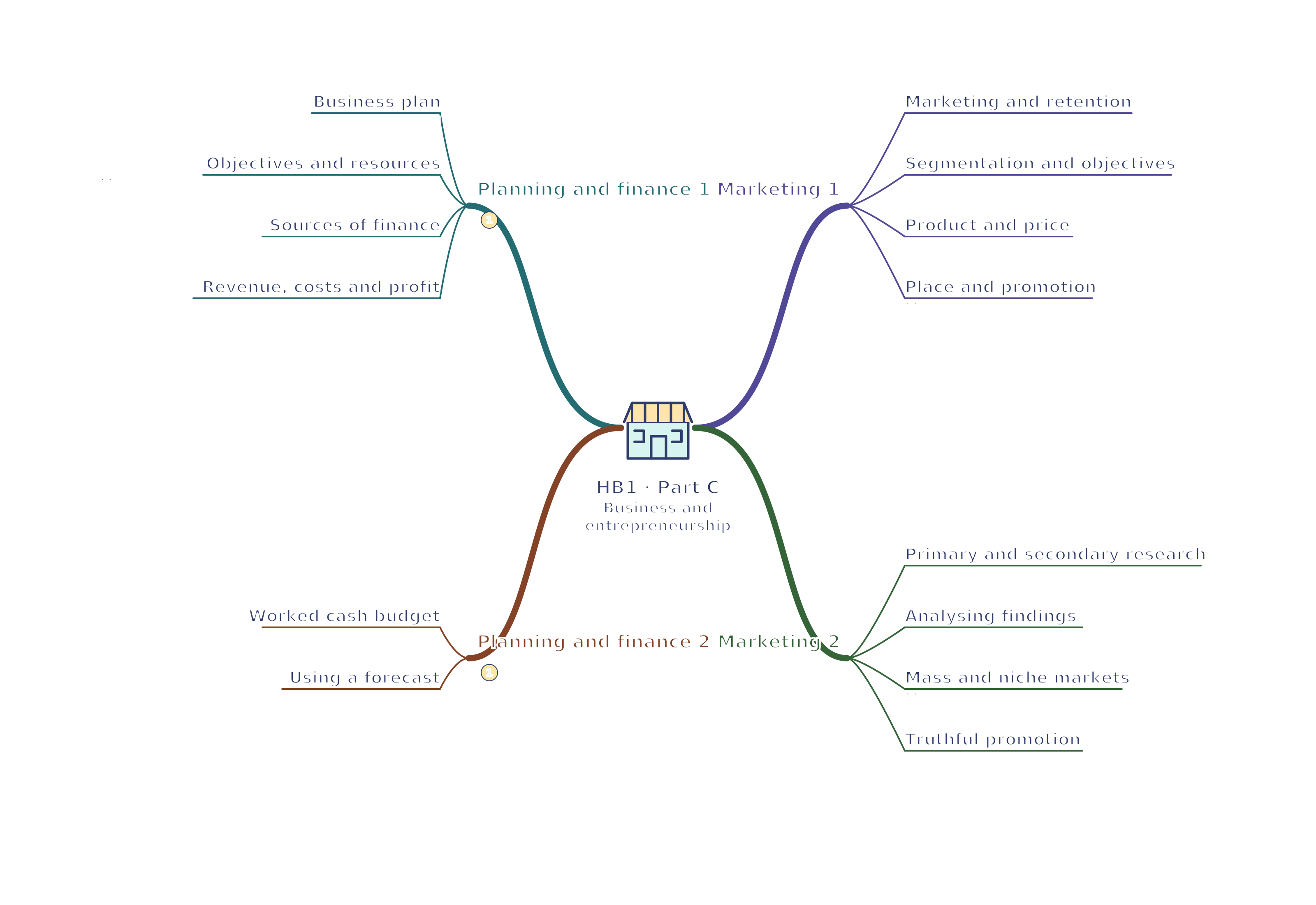
- Business plan — A plan links the idea, objectives, target market, people, equipment, premises, finance and marketing. It helps communicate with a lender and spot weaknesses before spending. Preparing it takes time and forecasts can be wrong; review the assumptions rather than treating the document as a promise.
- Objectives and resources — A useful objective identifies an action, measure and deadline, for example 20 paid evening appointments in the first month. Check staff hours, competence, booking space, products and equipment before promising capacity. An ambitious sales target without sufficient appointments cannot be achieved.
- Sources of finance — Savings avoid loan interest but risk the owner's money. A bank loan provides capital with repayments and interest; investors exchange funds for ownership or agreed returns. Grants have eligibility conditions, while an overdraft is usually short-term support rather than permanent income.
An overdraft lets an account go below zero up to an agreed limit; the business still owes that money and may pay charges or interest.
- Revenue, costs and profit — Revenue equals selling price multiplied by quantity sold. Fixed costs such as rent do not vary directly with each appointment; variable costs such as disposable materials do. Profit is revenue minus total costs for the period. Sales revenue is not the same as the owner's spendable cash.
- Worked cash budget — A fictional salon starts a month with £600, receives £1,800 cash and pays £1,450. Net cash flow is £350 and closing cash is £950. Formula: closing cash = opening cash + receipts − payments. A later loan repayment or purchase can cause a shortage even when sales are rising.

Cash starts at £600. Add £1,800 receipts and subtract £1,450 payments to leave £950. Net cash flow is positive £350. Original teaching schematic. - Using a forecast — If receipts are £300 lower than forecast, closing cash falls to £650 unless payments change. Consider timing, seasonal demand and a contingency before committing to costs. A forecast supports decisions; compare it with actual figures and explain variances rather than changing numbers to make it look successful.
A contingency is an allowance or backup plan for unexpected changes. A variance is the difference between a forecast figure and the actual result.
Marketing and research
- Marketing and retention — Marketing identifies customer needs and builds an offer that meets them. Satisfaction can encourage repeat bookings and recommendations; retention is keeping existing customers over time. Advertising attracts attention, but poor service, unclear prices or inaccessible booking can prevent repeat custom.
- Segmentation and objectives — Segmentation groups customers by relevant needs or characteristics such as age, location and income. Do not assume gender, ethnicity or disability dictates preferences; consult individuals respectfully. Internal budgets, staff, technology and strategy constrain objectives, while competitors, the economy, law and social change influence them externally.
- Product and price — Product includes a service's features and benefits: an appointment length is a feature, convenience is a benefit. Price may follow competitor levels, a temporary launch discount or seasonal demand. Undercutting can attract bookings but reduce margins; check whether revenue covers costs before making an offer.
A profit margin compares profit with sales revenue, often as a percentage. If a price cut leaves very little revenue after costs, the margin is small even if more appointments are sold.
- Place and promotion — Place concerns how and where customers access the offer: salon, shop, website or exhibition. Promotion includes adverts, displays, brochures, PR, sales promotions and partnerships. Direct contact reaches individuals; indirect publicity reaches a broader audience. Choose methods that fit budget and customer access.
PR means public relations: managing how the business communicates with the public and builds its reputation.
- Primary and secondary research — Primary research collects new evidence through observation, surveys, interviews or feedback cards. Secondary research uses existing statistics, websites and published reports. Quantitative evidence measures amounts; qualitative evidence explores reasons. One survey can collect both, but biased questions or an unrepresentative sample weaken conclusions.
- Analysing findings — If 18 of 30 respondents prefer evenings, that is 60% of the sample, not proof that 60% of all local residents will book. Compare competitor prices, availability and quality with your own costs. Combine counts with explanations, identify limitations and use findings to revise the offer.
- Mass and niche markets — A mass-market offer targets many customers and often faces strong competition and pressure on margins. A niche serves a narrower need and may command a higher margin but have fewer potential buyers. Neither model guarantees profit; compare demand, costs and competition in the actual setting.
- Truthful promotion — Claims need reliable evidence; myths, exaggerated before-and-after images and omitted conditions can mislead. Explain what an introductory price includes and when it ends. An ethical campaign uses consented images, accessible communication and realistic benefits, protecting customer trust as well as legal compliance.