Mr Kidman's Classroom



Revise the key ideas
Food and quantities
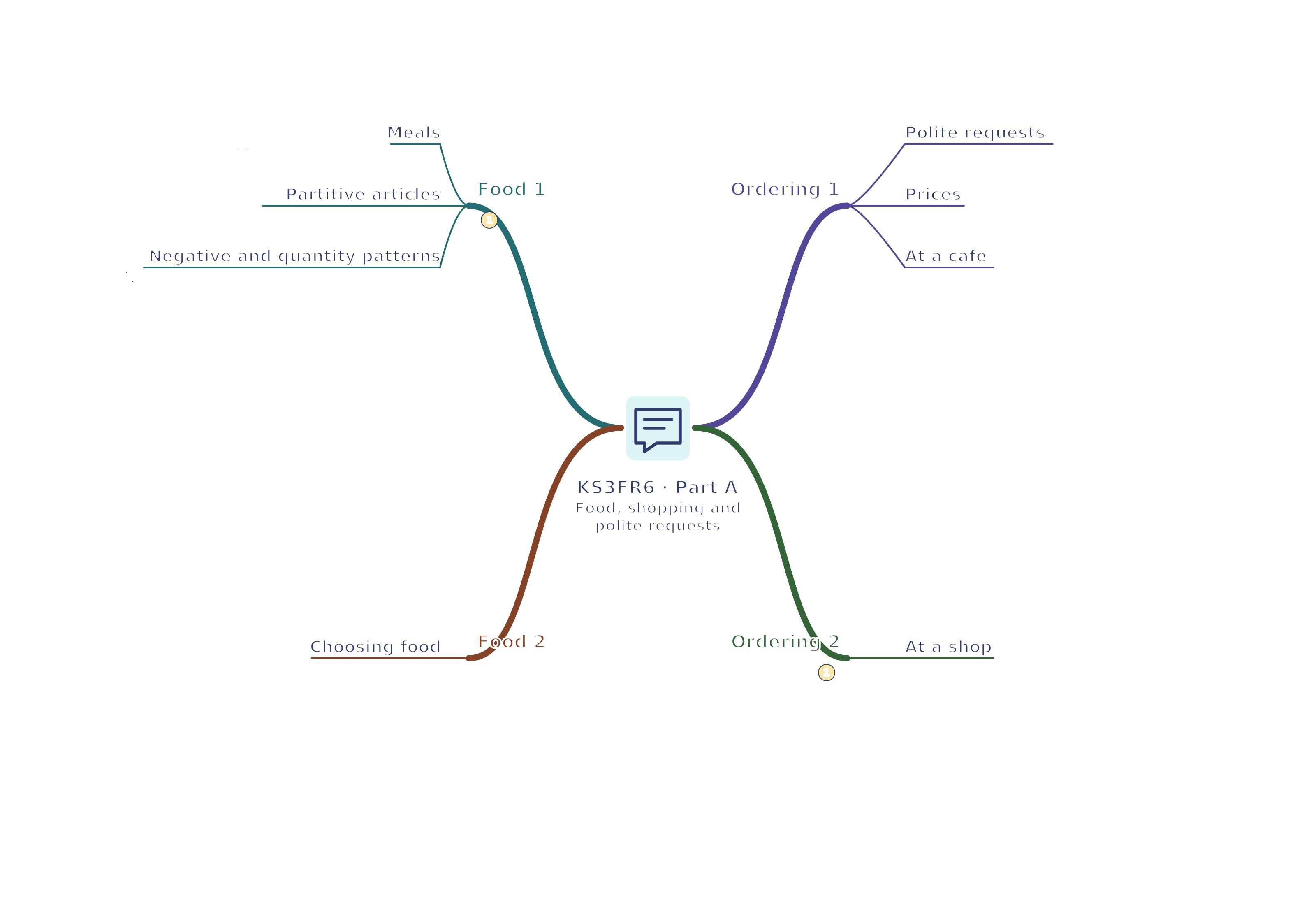
- Meals — Le petit déjeuner, le déjeuner and le dîner commonly name breakfast, lunch and the evening meal in France. Usage varies across French-speaking regions. Je prends mon petit déjeuner à sept heures describes a personal routine rather than claiming a universal national mealtime.
- Partitive articles — A partitive article introduces an unspecified amount of something, such as some bread. Du pain, de la soupe, de l’eau and des pâtes describe some bread, soup, water and pasta. Use du for masculine singular, de la for feminine singular and de l’ before a vowel sound. Je mange du pain describes an amount; j’aime le pain describes bread in general.
- Negative and quantity patterns — Je ne bois pas de lait usually uses de after an ordinary negative. Beaucoup de légumes and un kilo de pommes also use de after a quantity. Distinguish une bouteille d’eau from de l’eau: a measured container changes the construction.
- Choosing food — Un fruit, des légumes, du riz, du poisson, des œufs and du fromage provide useful vocabulary. Je suis végétarien/végétarienne describes a diet. Je suis allergique aux noix states a nut allergy; actual ingredient and allergy decisions require clear verified communication with a responsible adult or provider, not an assumption from a practice translation.
Buying and ordering
- Polite requests — Je voudrais un sandwich, s’il vous plaît means I would like a sandwich. Je voudrais is a conditional form of vouloir; je veux means I want and can sound abrupt in a service encounter. Bonjour, merci and au revoir support the social conventions of an exchange.
- Prices — Combien ça coûte ? asks the cost; ça coûte trois euros cinquante gives €3.50. Written French commonly uses a decimal comma, as in 3,50 €. Practise distinguishing treize from trente and checking both the number and item rather than assuming a familiar price.
- At a café — Vous désirez ? asks what a customer would like. Pour moi, une crêpe et un jus d’orange, s’il vous plaît is an order. L’addition, s’il vous plaît requests the bill. A dialogue needs to respond to availability and follow-up questions, not just read a fixed list.
Café exchange · Original synthetic practice speech, not an authentic recording or exam extract. Identify the first order, unavailable item, replacement drink and final price. Explain how the order changes.
Read the practice transcript
Bonjour, vous désirez ? Bonjour ! Je voudrais une crêpe et un jus d’orange, s’il vous plaît. Désolée, nous n’avons plus de jus d’orange. Vous voulez de l’eau ? Oui, merci. Combien ça coûte ? Ça coûte six euros cinquante.
- At a shop — Je cherche un pull means I am looking for a jumper. Vous avez une autre taille ? asks for another size. Je peux l’essayer ? asks to try it on. C’est trop cher and c’est moins cher express cost comparisons; be courteous when declining.
Questions and transactions
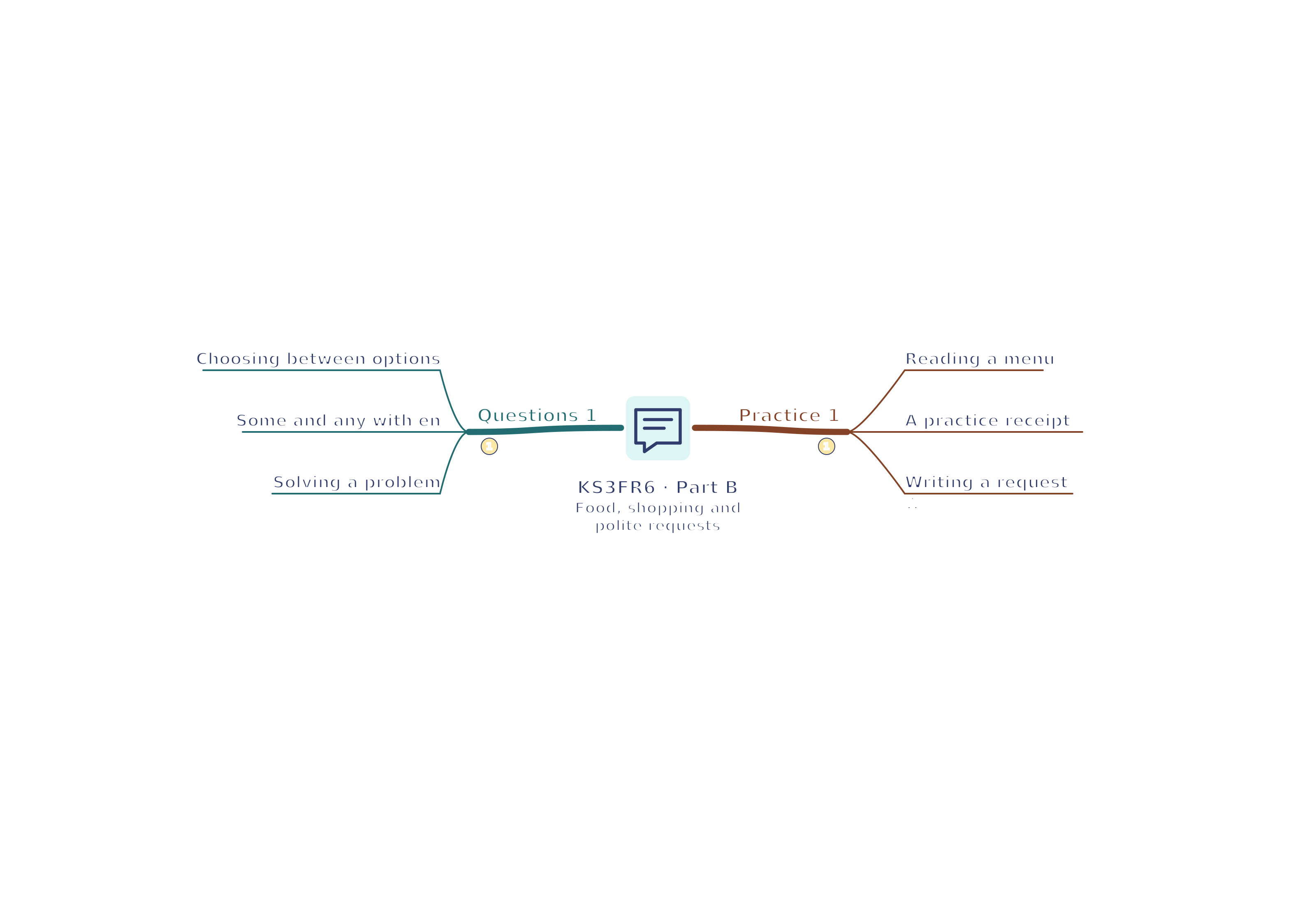
- Choosing between options — Vous préférez du thé ou du café ? offers alternatives. Quel parfum voulez-vous ? asks which flavour is wanted. Je préfère la vanille, mais je n’aime pas le chocolat gives a contrast. Quel changes to quelle, quels or quelles to agree with its noun.
- Some and any with en — Vous voulez des pommes ? Oui, j’en voudrais deux means would you like some apples? Yes, I would like two of them. En replaces a phrase introduced by de in this use; the number stays. Learn the whole construction before using en as a general replacement for every object.
- Solving a problem — Excusez-moi, ce n’est pas ce que j’ai commandé means this is not what I ordered. Il manque une boisson means a drink is missing. Explain the actual problem and request a suitable solution politely. Avoid rehearsing language that blames a person before checking what happened.
Authentic contexts and practice
- Reading a menu — Use a real age-appropriate menu selected by a teacher. Identify headings, dishes, prices and any conditions such as a lunchtime offer. A menu is an authentic source, but it may not list every ingredient; do not infer a dish is suitable for an allergy from its name alone.
- A practice receipt — Original example: Deux jus d’orange à 2,50 € chacun et une crêpe à 4 € coûtent 9 €. Chacun means each. Calculate 2 × 2.50 + 4, and then explain the order in French. The prices are invented for learning, not a claim about a current café.
- Writing a request — Write a short polite message asking about an item, size or availability. Choose tu or vous appropriately, state what you need and ask a precise question. Check quantities, articles, adjective agreement and the conditional request. Read the reply before deciding what to say next.