Mr Kidman's Classroom



Revise the key ideas
School life
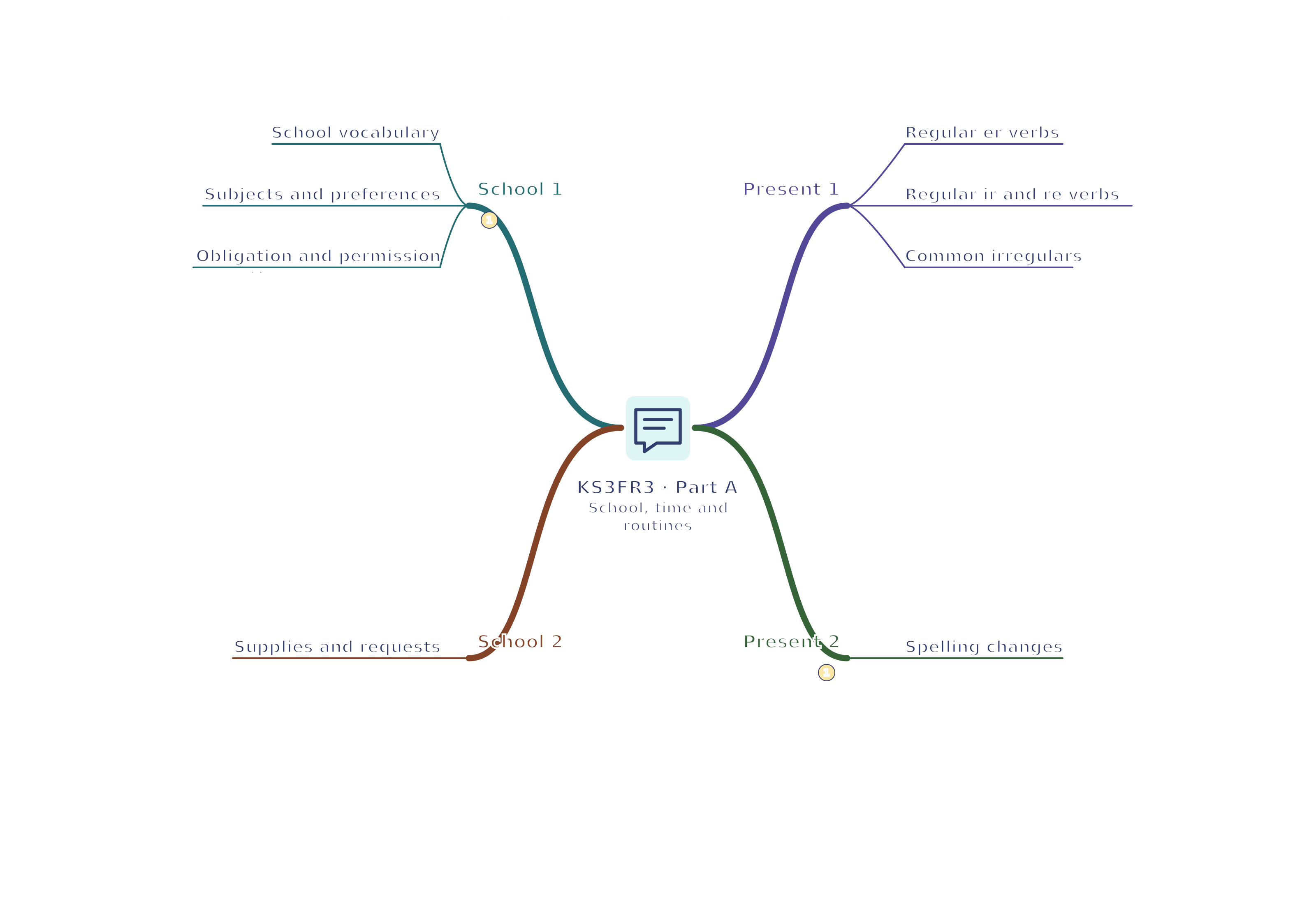
- School vocabulary — Le collège is normally lower secondary school in France, rather than an English college for older students. Le lycée is upper secondary school. La salle de classe means classroom, la bibliothèque library, la cantine canteen and la cour playground or courtyard. Institutions and routines vary; a single model timetable does not describe every French-speaking school.
- Subjects and preferences — J’étudie le français, les maths, l’histoire et les sciences means I study French, maths, history and science. Ma matière préférée est la musique gives a favourite subject. Explain preferences: j’aime les sciences parce que c’est intéressant, mais je trouve les maths difficiles.
- Obligation and permission — Il faut travailler means it is necessary to work; il ne faut pas courir means one must not run. Je dois porter un uniforme means I must wear a uniform. Je peux utiliser un ordinateur means I can use a computer. Do not interpret il ne faut pas as merely it is not necessary.
- Supplies and requests — J’ai besoin d’un stylo means I need a pen. Je voudrais une règle, s’il vous plaît makes a polite request. Je ne comprends pas and Je peux poser une question ? support classroom communication. Apply vous where the setting calls for formal address.
Present tense
- Regular er verbs — For parler, remove er and add e, es, e, ons, ez, ent: je parle, tu parles, il parle, nous parlons, vous parlez, ils parlent. Many endings sound the same, so the subject remains important. Je parle can mean I speak or I am speaking, depending on context.

Remove -er from parler, then add the ending matching the subject. The written endings do not all sound different. Full-size diagram - Regular ir verbs — Finir means to finish: je finis, tu finis, il finit, nous finissons, vous finissez, ils finissent. For I finish, choose je finis. Not every verb ending ir follows finir: partir (to leave) is a different pattern.
- Regular re verbs — Vendre means to sell: je vends, tu vends, il vend, nous vendons, vous vendez, ils vendent. For we sell, choose nous vendons. Practise the finir forms first, then the vendre forms in a separate short set.
- Common irregulars — Aller: je vais, tu vas, il va, nous allons, vous allez, ils vont. Faire: je fais, tu fais, il fait, nous faisons, vous faites, ils font. Prendre: je prends, tu prends, il prend, nous prenons, vous prenez, ils prennent. Aller means to go, faire to do/make, and prendre to take. Learn these high-frequency patterns through meaningful sentences: je vais au collège = I go to school; nous faisons nos devoirs = we do our homework; elle prend le bus = she takes the bus.
- Spelling changes — Nous mangeons retains e so g keeps its soft sound; nous commençons uses ç so c keeps its soft sound. Je préfère (I prefer) has è where the infinitive préférer (to prefer) has é. The infinitive is the dictionary form of the verb; the stem is the part to which endings are added. These are spelling or stem changes, not reasons to attach English endings to a French verb.
Time and frequency
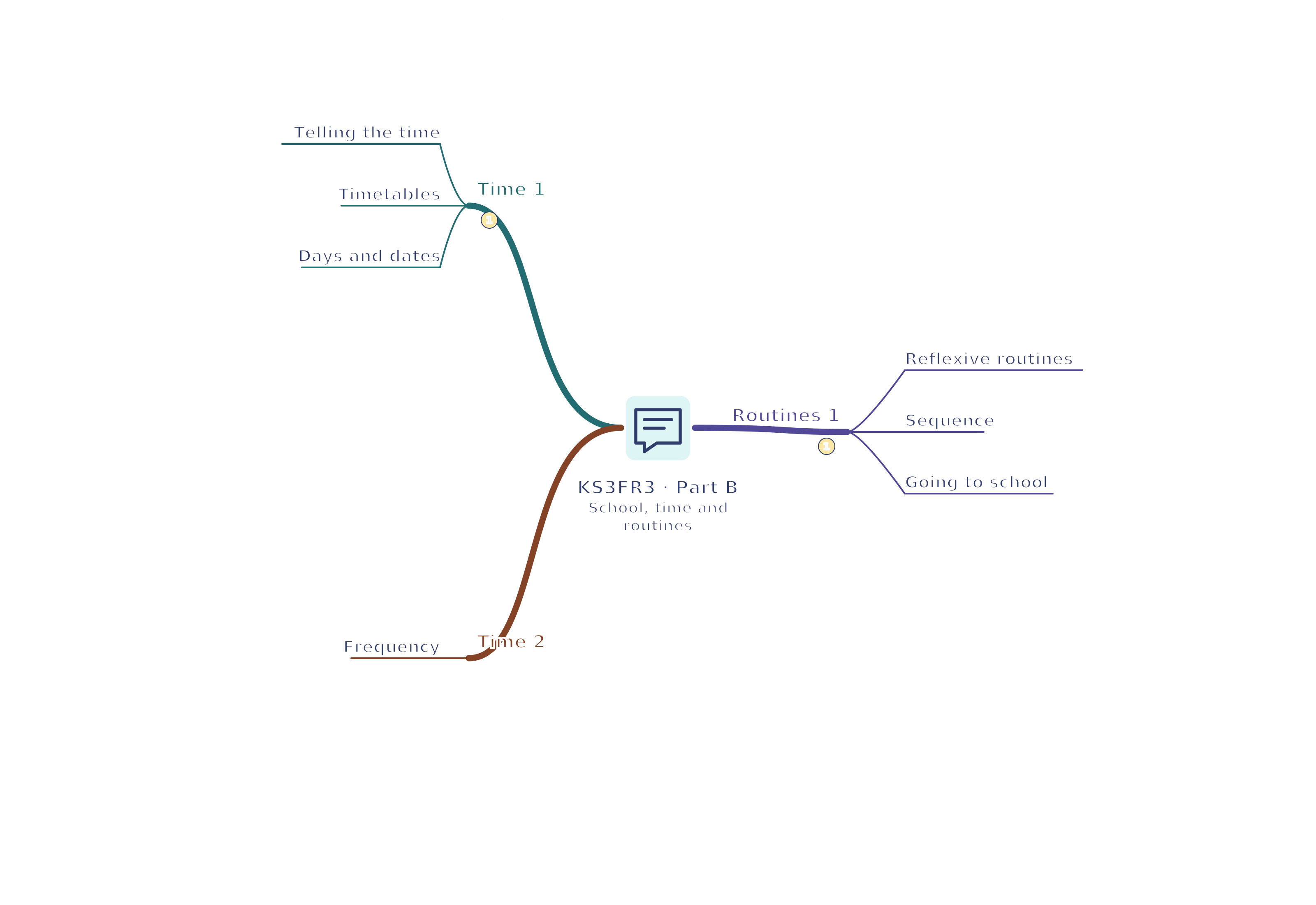
- Telling the time — Il est huit heures means it is eight o’clock. Il est huit heures et quart is quarter past eight; huit heures et demie is half past eight. Il est neuf heures moins le quart is quarter to nine. Midi is noon and minuit is midnight.
- Timetables — In a timetable, 14 h 30 means 2.30 pm. À quelle heure commence le cours ? asks when the lesson starts; il commence à neuf heures answers at nine. Distinguish il est neuf heures, telling the current time, from à neuf heures, giving an event’s time.
- Days and dates — Lundi, mardi, mercredi, jeudi, vendredi, samedi and dimanche normally begin with lower-case letters. Le lundi means on Mondays; lundi can mean on Monday in context. Le quinze octobre gives a date, but le premier octobre uses premier for the first day of a month.
- Frequency — Toujours, souvent, parfois, rarement and jamais express always, often, sometimes, rarely and never. Je joue souvent au tennis differs from je ne joue jamais au tennis. In careful writing, jamais normally pairs with ne when it means never.
Daily routines
- Reflexive routines — Je me lève, je me lave and je m’habille mean I get up, wash and get dressed. Nous nous levons changes both pronoun and verb. Je me lève à sept heures puts the event at a time; avoid dropping me as though it were an optional English word.
- Sequence — D’abord means first; ensuite or puis means next; enfin means finally. D’abord, je me lève. Ensuite, je prends mon petit déjeuner. Connect actions in an order that makes sense, and add a time or frequency to make a routine more precise.
- Going to school — Je vais au collège à pied means I go to school on foot. En bus, en train and en voiture describe other travel. Je pars à huit heures et j’arrive à huit heures et demie distinguishes leaving from arriving. Journey details can be fictional; do not publish a pupil’s identifiable daily route.
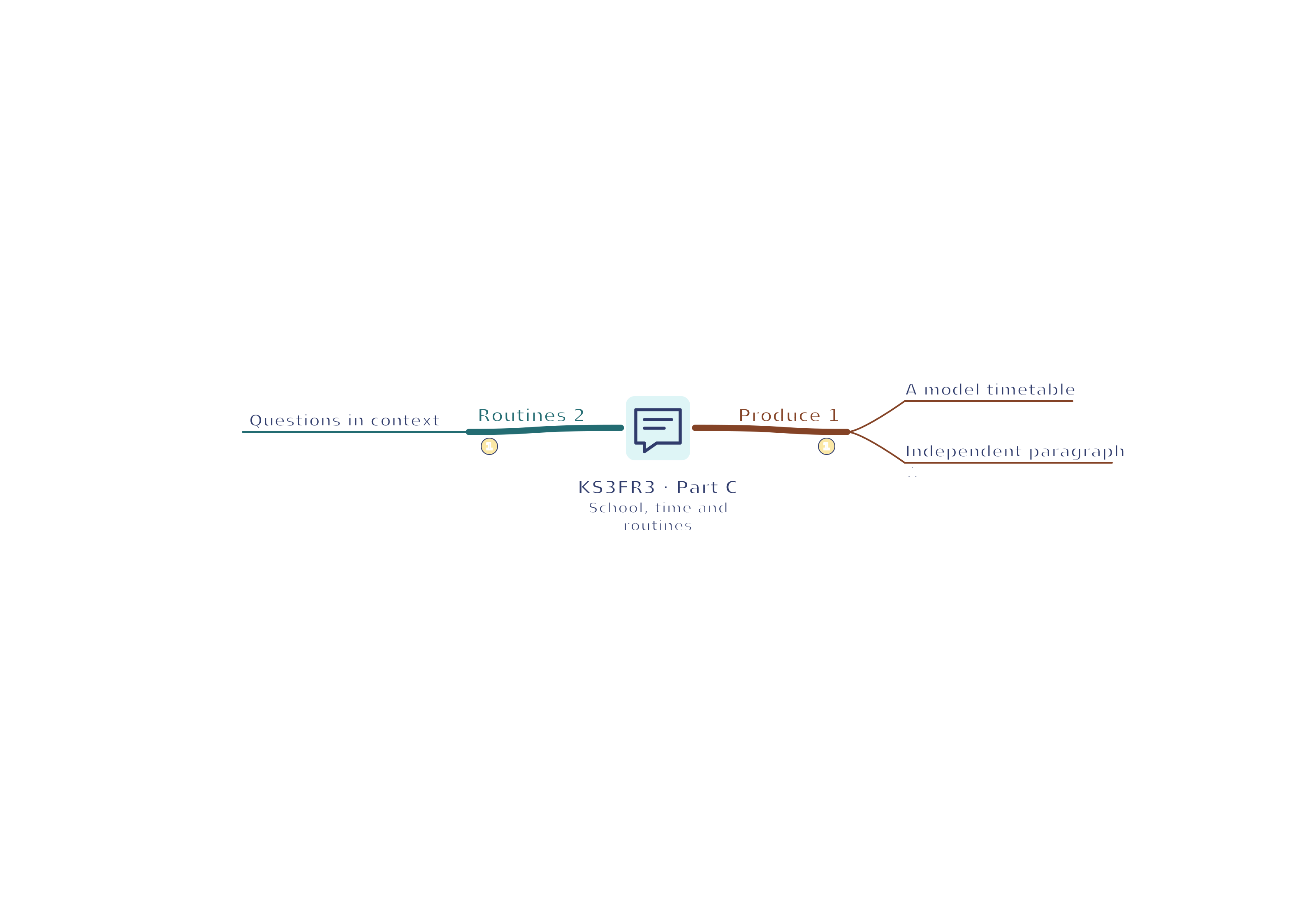
- Questions in context — Est-ce que tu aimes ton collège ? uses a question phrase without inverting the subject and verb. Aimes-tu ton collège ? uses inversion; tu aimes ton collège ? can use spoken intonation. Learn a suitable pattern, then handle follow-up questions instead of memorising just one reply.
Reading and producing
- A model timetable — Original example: Le lundi, les cours commencent à huit heures et demie. À midi, je mange à la cantine. Après les cours, je fais mes devoirs. Explain which events repeat weekly, give their sequence and translate les cours as lessons/classes in this school context.
School announcement · Original synthetic practice speech, not an authentic recording or exam extract. Identify the lesson, start time, room location and midday activity. Transcribe the sentence giving the time.
Read the practice transcript
Bonjour à tous. Aujourd’hui, le cours de sciences commence à neuf heures et quart. La salle de classe est près de la bibliothèque. À midi, nous mangeons à la cantine.
- Independent paragraph — Describe a school day, state a preference with a reason, include a routine and ask one question. Check present-tense subject endings, accents and time expressions. Then explain it orally using brief cues; being able to read a written paragraph aloud is different from responding spontaneously.